Affiliate disclosure: Some links on this page are affiliate links. If you make a purchase through them, Larkmeadow may earn a commission at no additional cost to you.
If you share your home with a cat or a dog, choosing a houseplant comes with an extra question: what happens if your pet takes a bite? Plenty of popular houseplants are on the ASPCA’s list of plants that are toxic to cats and dogs, including several that are often recommended for beginners.
There are still lots of attractive options. The 13 plants below are all listed by the ASPCA as non-toxic to both cats and dogs. They’re grouped by the light they need, and each one includes care notes from university Extension sources, so you can match a plant to the spot you actually have. Further down, you’ll find the common houseplants the ASPCA lists as toxic, a short section on lilies, where the details really matter, and a table to help you compare plants if you’re shopping online.
If you’re new to houseplants, our guide to easy houseplants for beginners covers pots, drainage, and watering basics that apply to every plant here.
What “Pet-Safe” Means (and What It Doesn’t)
The pet safety information in this guide comes from the ASPCA Animal Poison Control Center’s toxic and non-toxic plants list. It has a separate entry for each plant, showing whether that plant is toxic or non-toxic to dogs, cats, and horses. A few things are worth knowing before you rely on it:
- “Non-toxic” doesn’t mean edible. The ASPCA notes that eating any plant material may cause vomiting and stomach upset in dogs and cats. Plants listed as non-toxic, or as causing only mild stomach upset, aren’t expected to be life-threatening. That’s different from being something your pet should eat.
- The list isn’t complete. The ASPCA describes it as a compilation of the most frequently encountered plants. If a plant isn’t listed, that doesn’t tell you it’s safe.
- Cats and dogs can differ. Some plants are toxic to cats but listed as non-toxic to dogs, so check the entry for each animal you have.
- Match the botanical name, not just the common name or photo. Common names are often shared by different plants, and plants can look different from the photos on the ASPCA’s listings. The botanical (scientific) name on the plant tag is the most reliable way to match a plant to its entry.
- When in doubt, call. If you think your pet is ill or has eaten something it shouldn’t have, contact your veterinarian or the ASPCA Animal Poison Control Center at (888) 426-4435. The ASPCA notes that a consultation fee may apply.
Throughout this guide, “pet-safe” is shorthand for “listed by the ASPCA as non-toxic to both cats and dogs.” Each plant below links to its ASPCA entry so you can check it yourself.
Quick Reference: 13 Pet-Safe Houseplants at a Glance
All 13 plants are listed by the ASPCA as non-toxic to both cats and dogs. The “Note” column flags anything extra to check.
On mobile, swipe sideways to view all columns.
| Plant | Light | Watering | Note |
|---|---|---|---|
| Spider plant | Bright, indirect; adapts to medium | Let the soil dry briefly between waterings | — |
| African violet | Bright, without direct afternoon sun | Avoid overwatering; use room-temperature water | — |
| Moth orchid | Bright, with little or no direct sun | About weekly while growing; don’t let it dry out completely | Keep water off the leaves |
| Haworthia | A few hours of direct sun plus bright, indirect light | Let the mix dry between waterings; less in winter | Don’t confuse with aloe (toxic) |
| Ponytail palm | As bright as possible | Deeply but infrequently; much less in winter | Not the same plant as sago palm (toxic) |
| Christmas cactus | Bright, filtered | Let the soil dry between waterings; never leave it in water | ASPCA entry is Schlumbergera bridgesii; check the tag |
| Wax plant (Hoya carnosa) | Bright, indirect | Water thoroughly, then let it dry almost completely | Keep above 55°F |
| Polka dot plant | Bright, filtered | Plenty of water; let the soil dry slightly between waterings | ASPCA lists mild vomiting and diarrhea as possible signs |
| Cast iron plant | Low; a north-facing window | When the top 2 to 3 inches of soil are dry | — |
| Parlor palm | Tolerates lower light; filtered light near a window | When the soil surface dries; don’t let it dry out completely | — |
| Baby rubber plant (Peperomia obtusifolia) | Indirect; tolerates somewhat low light near a large north window | Let the soil dry between waterings | — |
| Boston fern | Medium; grows poorly in low light | When the soil surface begins to feel dry | — |
| Calathea | Tolerates low light; best at 150 to 200 foot-candles | When the surface is slightly dry | Prefers 40 to 60% humidity; ASPCA entry is genus-level (Calathea spp.) |
Pet-Safe Houseplants for Bright, Indirect Light
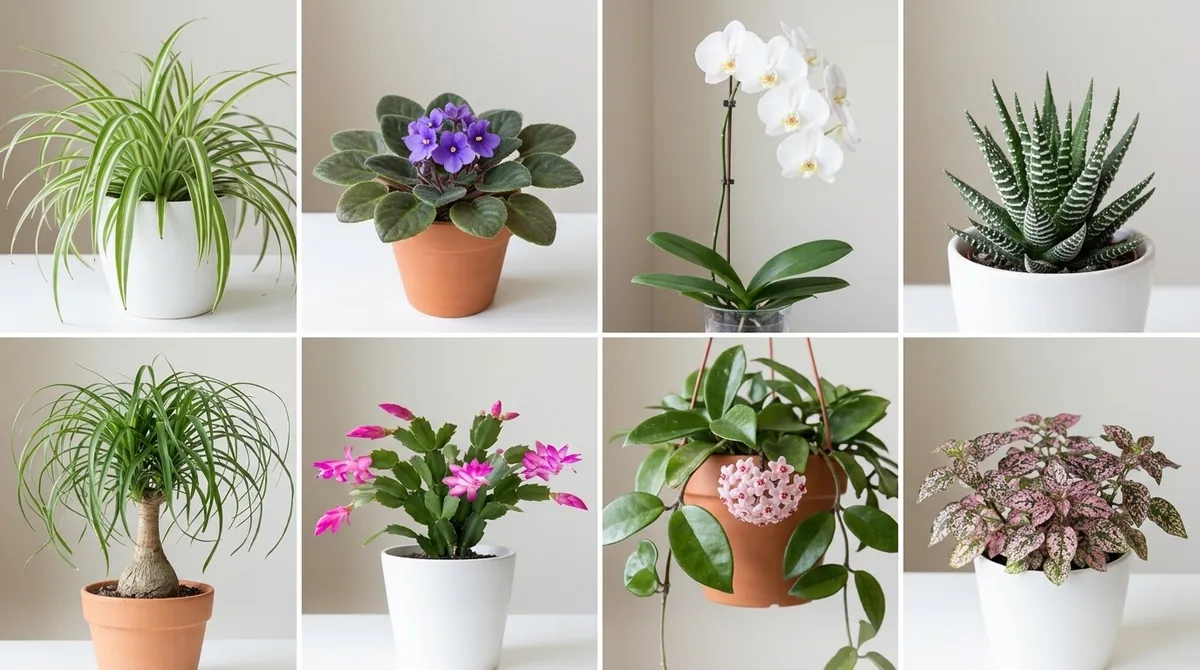
These plants do best near a window that gets plenty of light. A few can handle some direct sun, but most will scorch in strong midday light.
1. Spider Plant (Chlorophytum comosum)
ASPCA: non-toxic to cats and dogs (Chlorophytum comosum).
Spider plants have arching, often striped leaves and small plantlets that dangle from long stems. Clemson Cooperative Extension’s Home & Garden Information Center (HGIC) says spider plants grow best in bright, indirect light. They can tolerate some direct sun, but midday light may scorch the leaves. Let the soil dry out briefly between waterings. Illinois Extension adds that spider plants prefer bright light but are very adaptable to medium light.
Where to find it: Plant Addicts sells the Bonnie spider plant, labeled Chlorophytum comosum ‘Bonnie’.
2. African Violet (Saintpaulia)
ASPCA: non-toxic to cats and dogs (Saintpaulia spp.).
African violets are a good pick if you want flowers as well as foliage. Clemson HGIC recommends a bright spot that doesn’t get direct afternoon sun, within about 3 feet of a large south-, east-, or west-facing window. If yours stops blooming, lack of light is the most common reason.
Watering takes a little care. Overwatering is one of the most common problems with African violets and can lead to root and crown rot. Cold water that touches the leaves can leave pale spots, so use room-temperature water. You can water from the top, or set the pot in a tray of water until the soil surface is moist and then pour off what’s left.
Naming note: NC State Extension now lists the African violet as Streptocarpus ionanthus (previously Saintpaulia ionantha). The ASPCA’s entry uses Saintpaulia, which is still the name on many plant tags.
3. Moth Orchid (Phalaenopsis)
ASPCA: non-toxic to cats and dogs (Phalaenopsis sp.).
NC State Extension describes moth orchids as the most popular and widely available kind of orchid sold as a houseplant. According to Clemson HGIC, they’re among the most adaptable orchids to indoor light, and they do best in a bright window with little or no direct sun, such as an east window.
While the plant is actively growing, Clemson suggests watering about once a week and letting it dry slightly before the next watering. Moth orchids don’t have the water-storing structures some other orchids have, so don’t let them dry out completely. Keep water off the leaves and out of the spots where the leaves join the stem, since standing water there can lead to disease.
Where to find it: Plant Addicts sells a white Phalaenopsis orchid, labeled Phalaenopsis amabilis.
4. Haworthia
ASPCA: non-toxic to cats and dogs (Haworthia species). The ASPCA also has a separate entry for zebra haworthia (Haworthia fasciata), also non-toxic to cats and dogs.
Haworthias are small succulents that fit easily on a windowsill. Wisconsin Horticulture notes that they’re more tolerant of modest light than many succulents. They grow well in an east or west window that gets a few hours of direct light, with bright, indirect light the rest of the day. A south window can work, but it may be too bright for some types unless a sheer curtain filters the sun. In too little light, the leaves stretch out and lose their color.
Let the potting mix dry between waterings and water less in winter. Soil that stays wet for a long time, especially when it’s cool or dim, can lead to root rot.
Naming note: Some plants sold as haworthias are now classified as Haworthiopsis. For example, NC State Extension lists zebra haworthia as Haworthiopsis fasciata, previously Haworthia fasciata, the name the ASPCA uses. Aloe can look similar to some haworthias, and the ASPCA lists aloe as toxic to cats and dogs, so check the tag.
Where to find it: Plant Addicts sells zebra haworthia as the Zebra Succulent, labeled Haworthia fasciata.
5. Ponytail Palm (Beaucarnea recurvata)
ASPCA: non-toxic to cats and dogs (listed as “Pony Tail,” Beaucarnea recurvata).
With its swollen trunk and fountain of thin leaves, the ponytail palm is easy to recognize. Wisconsin Horticulture describes it as a desert plant adapted to bright light, so give it a window with as much light as possible. The trunk stores water, and overwatering is the most common reason these plants fail. Water deeply but infrequently, let the soil dry out between waterings, and cut back significantly in winter.
Despite the name, the ponytail palm is a different plant from the sago palm, which the ASPCA lists as toxic to cats and dogs.
Where to find it: Plant Addicts sells the ponytail palm, labeled Beaucarnea recurvata.
6. Christmas Cactus (Schlumbergera bridgesii)
ASPCA: non-toxic to cats and dogs (Schlumbergera bridgesii).
What to check when you buy one: common names aren’t reliable for holiday cacti, so go by the botanical name on the tag.
- Tag says Schlumbergera bridgesii: this is the plant in the ASPCA’s Christmas cactus entry, listed as non-toxic to cats and dogs.
- Tag says Schlumbergera truncata (Thanksgiving cactus), Schlumbergera gaertneri, or Schlumbergera × buckleyi: the ASPCA has no separate entry for these, so its Christmas cactus listing doesn’t tell you about them.
- Tag says only “Christmas cactus” or “holiday cactus”: ask the seller for the botanical name before you count on the ASPCA listing.
Why the name alone isn’t enough: sources use the same common names for different plants. The ASPCA gives “Easter cactus” as another name for S. bridgesii. University of Minnesota Extension uses S. bridgesii for Christmas cactus but S. gaertneri for Easter cactus. NC State Extension uses “Christmas cactus” for the hybrid S. × buckleyi.
UMN explains that holiday cacti need bright but filtered light, higher humidity, and more moisture than most cacti and succulents. Well-drained soil and a pot with drainage holes are critical. Let the soil dry out between waterings, and don’t let the plant sit in water. To bloom, these plants need short days, cool nights, or both. UMN suggests a cool, bright spot with night temperatures of 55 to 65°F, and notes that plants are unlikely to bloom if nights stay above 65°F.
7. Wax Plant (Hoya carnosa)
ASPCA: non-toxic to cats and dogs (Hoya carnosa, listed as “honey plant,” with wax plant as another name).
The ASPCA has several hoya entries, all listed as non-toxic to cats and dogs:
- Hoya carnosa: the honey plant entry
- The curly Hoya carnosa ‘Krinkle Kurl’: the wax plant and Hindu rope plant entries
- Sweetheart hoya (Hoya kerrii): the sweetheart hoya entry
There are many other hoya species, so check the name if you’re buying something less common.
Hoyas are trailing or climbing plants with thick, waxy leaves and clusters of star-shaped flowers. Iowa State University Extension says hoyas thrive in bright, indirect light, meaning light bright enough to read a book by, but not direct sun. If you want flowers, one of the brightest windows in your home is usually best. Too much direct light can scorch the leaves, while low light leads to thin, stretched growth and few or no flowers.
Water thoroughly, then let the mix dry almost completely before watering again, and water less in winter. Hoyas adapt well to average indoor humidity. Iowa State notes that they don’t tolerate temperatures below 55°F, so keep them away from cold windows in winter.
Where to find it: Plant Addicts sells the rope plant hoya, labeled Hoya carnosa ‘Krinkle Kurl’, the same cultivar named in the ASPCA’s wax plant entry.
8. Polka Dot Plant (Hypoestes phyllostachya)
ASPCA: non-toxic to cats and dogs (Hypoestes phyllostachya). The entry also lists mild vomiting and diarrhea as possible signs, so this is one to watch if your pet likes to chew on plants.
Polka dot plants have small leaves splashed with pink, red, or white. Wisconsin Horticulture says they grow best in bright, filtered light but tolerate some sun. Their color is better in partial shade than in full sun, but the leaves fade in very low light, and the plants get leggy when light is lower than ideal. They like humidity and grow better with plenty of water; let the soil dry slightly between waterings.
Where to find it: Plant Addicts sells the pink polka dot plant, labeled Hypoestes phyllostachya ‘Pink’.
Pet-Safe Houseplants for Medium to Lower Light
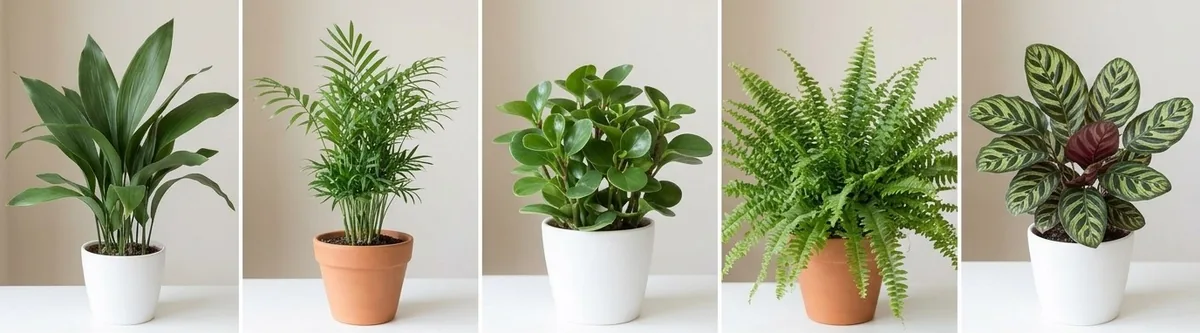
These plants can handle rooms that face north or spots farther from a window. “Lower light” still means some natural light, though. None of these plants will thrive in a room with no window at all.
9. Cast Iron Plant (Aspidistra elatior)
ASPCA: non-toxic to cats and dogs (Aspidistra elatior).
The cast iron plant is a good fit for a dim room. Clemson HGIC says it can be grown indoors in low light and suggests a north-facing window or a low-light area away from south-facing windows. It can handle periods of drought but benefits from occasional watering: water when the soil is dry 2 to 3 inches down, let the water drain, and don’t leave water in the saucer.
10. Parlor Palm (Chamaedorea elegans)
ASPCA: non-toxic to cats and dogs (Chamaedorea elegans).
Parlor palms are small palms with feathery fronds. According to Clemson HGIC’s guide to indoor palms, parlor palms tolerate lower light levels well. For indoor palms in general, Clemson recommends filtered light near a south-, east-, or west-facing window. Water thoroughly when the surface of the soil dries, pour off the water in the saucer, and don’t let the plant dry out completely or stand in water.
Where to find it: Plant Addicts sells the parlor palm, labeled Chamaedorea elegans.
11. Baby Rubber Plant (Peperomia obtusifolia)
ASPCA: non-toxic to cats and dogs (Peperomia obtusifolia, also listed as blunt leaf peperomia).
The baby rubber plant is a peperomia with thick, rounded leaves. Clemson HGIC recommends indirect light from an east- or south-facing window, and notes that peperomias can tolerate somewhat low light near a large north-facing window. Let the soil dry out between waterings. Overwatered plants tend to drop their leaves.
There are many peperomia species, and the ASPCA lists them one by one, so a listing for this species doesn’t cover every plant sold as a peperomia.
Where to find it: Plant Addicts sells the marble peperomia, labeled Peperomia obtusifolia ‘Marble’.
12. Boston Fern (Nephrolepis exaltata ‘Bostoniensis’)
ASPCA: non-toxic to cats and dogs (listed as Nephrolepis exalta bostoniensis).
Boston ferns need more light than you might expect from a plant that grows in shade outdoors. University of Minnesota Extension explains that tropical ferns grow poorly in low light. They grow best in medium light, such as an east-facing window or a few feet back from a west- or south-facing window. During the short days of winter, UMN suggests moving them right into a west or south window, as long as sheer curtains or nearby trees filter the light.
Water thoroughly with room-temperature water, empty the saucer after a few minutes, and wait until the soil surface begins to feel dry before watering again. NC State Extension lists the Boston fern as ‘Bostoniensis’, a cultivar of Nephrolepis exaltata.
13. Calathea (Calathea / Goeppertia)
ASPCA: non-toxic to cats and dogs. This entry is for the genus as a whole (Calathea spp.), not for individual species.
Calatheas are grown for their patterned leaves. NC State Extension notes that the leaves fold in response to darkness, which is why these plants are commonly called prayer plants.
Naming note:
- Genus-level match only: The ASPCA doesn’t have separate entries for most individual calathea species. A plant tagged Calathea makoyana, for example, falls under the Calathea spp. entry by its genus, not under an entry for that species. Keep that in mind when you compare it with plants that have their own species-level entries.
- Genus change: NC State Extension also notes that many species formerly classified as Calathea have been moved to the genus Goeppertia, though they’re still often called calatheas. A plant tagged only with Goeppertia doesn’t match the ASPCA’s Calathea spp. entry word for word.
- “Prayer plant”: The ASPCA’s prayer plant entry is for Calathea insignis. The plant often sold as prayer plant, Maranta leuconeura, doesn’t have its own ASPCA entry, so that listing doesn’t tell you about it.
The most detailed university guidance we found is a University of Florida IFAS guide written for commercial indoor plantings, so the care details here are limited. It says calatheas tolerate indoor light as low as 75 foot-candles but do best at 150 to 200 foot-candles. They hold their appearance better at 40 to 60% relative humidity. The guide recommends letting the surface of the potting mix dry slightly before watering and keeping indoor temperatures between 65 and 80°F.
Where to find it: Plant Addicts sells the Makoyana calathea, labeled Calathea makoyana. It matches the ASPCA’s calathea entry at the genus level.
Common Houseplants to Keep Away From Pets
Some of the most popular houseplants are on the ASPCA’s toxic list. Each one below is listed as toxic to both cats and dogs.
On mobile, swipe sideways to view all columns.
| Plant | Botanical name in the ASPCA entry | Toxic principle (ASPCA) |
|---|---|---|
| Golden pothos | Epipremnum aureum | Insoluble calcium oxalates |
| Snake plant | Sansevieria trifasciata | Saponins |
| Heartleaf philodendron (listed as “Cordatum”) | Philodendron oxycardium | Insoluble calcium oxalates |
| Monstera (listed as cutleaf philodendron) | Monstera deliciosa | Insoluble calcium oxalates |
| Peace lily | Spathiphyllum | Insoluble calcium oxalates |
| Dieffenbachia | Dieffenbachia | Insoluble calcium oxalates, proteolytic enzyme |
| Dragon tree (listed as Madagascar dragon tree) | Dracaena marginata | Saponins |
| Aloe | Aloe vera | Saponins, anthraquinones |
| Jade plant | Crassula argentea | Unknown |
| English ivy | Hedera helix | Triterpenoid saponins |
| Weeping fig (listed as Indian rubber plant) | Ficus benjamina | Proteolytic enzyme (ficin), psoralen (ficusin) |
| Sago palm | Cycas revoluta, Zamia species | Cycasin |
A high shelf isn’t a safety guarantee. Moving a toxic plant out of reach lowers the chance that your pet gets to it, but it doesn’t remove the risk. Cats can climb and jump, leaves and flowers drop to the floor, and a curious pet may reach more than you expect. If you have pets, the most dependable choice is a plant from the non-toxic list. If you decide to keep a plant from this table, think of placement as reducing the risk, not eliminating it. If your pet does chew on one, call your veterinarian or the ASPCA Animal Poison Control Center (number above) rather than waiting for signs.
Pothos, snake plant, heartleaf philodendron, peace lily, and dragon tree all appear in our easy houseplants for beginners guide, which notes their ASPCA listings. In a home with pets, the 13 plants above are the safer starting point.
Rubber plant note: the ASPCA’s “Indian rubber plant” entry is for Ficus benjamina. The rubber plant commonly sold as a houseplant, Ficus elastica, doesn’t have its own entry, so the ASPCA list can’t tell you whether it’s safe.
Lilies: Know Which Kind, and Which Pet
“Lily” is one of the most confusing plant names for pet owners. It’s used for several different plants, and the risk depends on both the plant and the animal.
| Plant | Cats (ASPCA) | Dogs (ASPCA) |
|---|---|---|
| Easter lily (Lilium longiflorum) | Toxic | Non-toxic |
| Tiger lily (Lilium tigrinum) | Toxic | Non-toxic |
| Stargazer lily (Lilium orientalis) | Toxic | Non-toxic |
| Asiatic lily (Lilium asiatica) | Toxic | Not stated in the entry |
| Daylily (Hemerocallis spp.) | Toxic | Non-toxic |
| Peace lily (Spathiphyllum) | Toxic | Toxic |
| Calla lily (Zantedeschia aethiopica) | Toxic | Toxic |
| Lily of the valley (Convallaria majalis) | Toxic | Toxic |
- True lilies (Lilium) and daylilies (Hemerocallis) are the ones to watch with cats. The ASPCA’s Easter lily, Asiatic lily, and daylily entries list kidney failure and death as possible outcomes for cats. The Easter lily entry adds that cats are the only species known to be affected. If you have a cat, the safest choice is not to bring these plants into your home at all, including as cut flowers in bouquets. A high shelf or a closed room isn’t a reliable substitute. If a cat may have chewed on any part of one, contact your veterinarian or the ASPCA Animal Poison Control Center right away.
- Peace lily, calla lily, and lily of the valley are toxic to both cats and dogs. They aren’t true lilies, and the ASPCA lists different toxic principles: insoluble calcium oxalates for peace lily and calla lily, and cardenolides for lily of the valley.
- A “non-toxic to dogs” listing for a true lily doesn’t make it a good choice for a mixed household. If you have both a dog and a cat, go by the cat’s listing.
Pet-Safe Doesn’t Mean Edible: Practical Tips
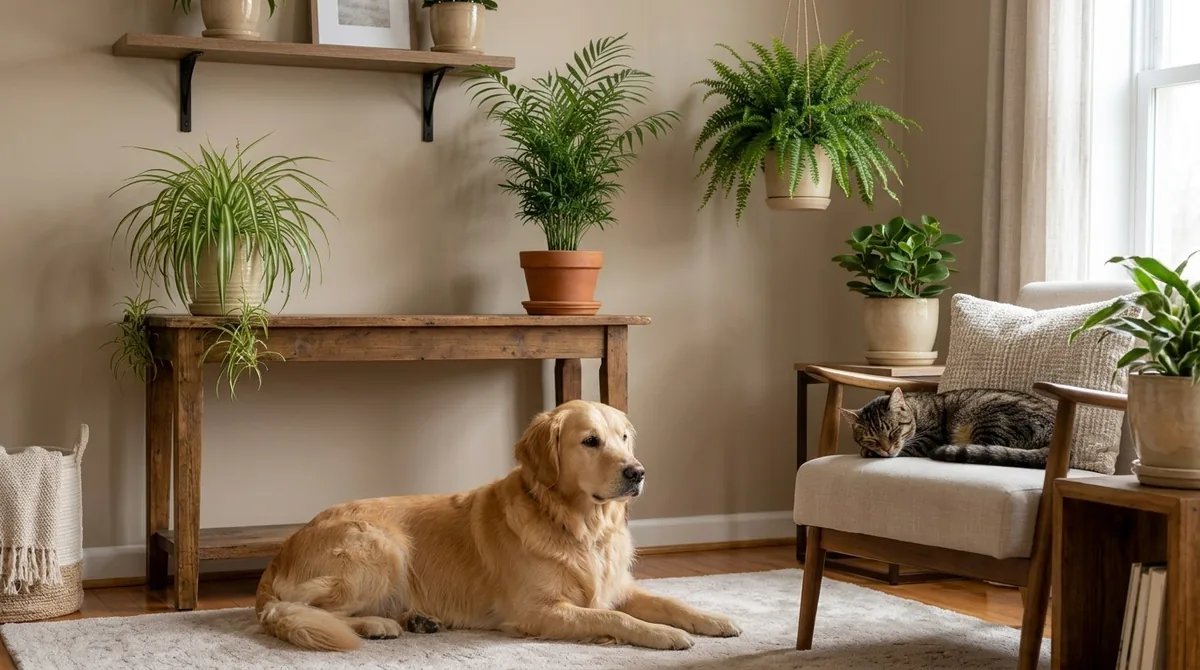
Even with plants from the non-toxic list, a few habits help keep both your pets and your plants in good shape:
- Place plants with your pet in mind. A plant that’s constantly chewed won’t do well, and the ASPCA notes that any plant material can upset a pet’s stomach. Hanging baskets and higher shelves suit trailing plants like hoyas and spider plants.
- Pick up fallen leaves and flowers. That way, the only plant material within reach is what’s still on the plant.
- Remember the rest of the pot. This guide covers the plants themselves. Potting mix, fertilizer, and pest-control products are separate questions, so read their labels and store them where pets can’t get to them.
Shopping for Pet-Safe Houseplants Online
When you’re buying online, the product name doesn’t always match the name on the ASPCA list. Zebra haworthia may be sold as a “zebra succulent,” for example, and many plants are sold as named cultivars. The botanical name on the product page is the best way to check a plant against its ASPCA entry.
The table below lists the plants from this guide that Plant Addicts sells under a botanical name that matches the ASPCA entry (for calathea, at the genus level), so you can compare them side by side.
On mobile, swipe sideways to view all columns.
| Plant in this guide | Product | Botanical name on the product page | Matching ASPCA entry | Light |
|---|---|---|---|---|
| Spider plant | Bonnie Spider Plant | Chlorophytum comosum ‘Bonnie’ | Spider plant (C. comosum) | Bright, indirect |
| Moth orchid | White Phalaenopsis Orchid | Phalaenopsis amabilis | Phalaenopsis orchid (Phalaenopsis sp.) | Bright, little or no direct sun |
| Haworthia | Zebra Succulent | Haworthia fasciata | Zebra haworthia (H. fasciata) | A few hours of sun plus bright, indirect |
| Ponytail palm | Ponytail Palm | Beaucarnea recurvata | Pony tail (B. recurvata) | As bright as possible |
| Wax plant | Rope Plant Hoya | Hoya carnosa ‘Krinkle Kurl’ | Wax plant (H. carnosa ‘Krinkle Kurl’) | Bright, indirect |
| Polka dot plant | Pink Polka Dot Plant | Hypoestes phyllostachya ‘Pink’ | Polka dot plant (H. phyllostachya) | Bright, filtered |
| Parlor palm | Parlor Palm | Chamaedorea elegans | Parlor palm (C. elegans) | Tolerates lower light |
| Baby rubber plant | Marble Peperomia | Peperomia obtusifolia ‘Marble’ | Baby rubber plant (P. obtusifolia) | Indirect; somewhat low light near a large north window |
| Calathea | Makoyana Calathea | Calathea makoyana | Calathea (Calathea spp.; genus-level match, no species entry) | Tolerates low light; best at 150 to 200 foot-candles |
A few plants in this guide aren’t in the table. We didn’t find a product whose botanical name matches the ASPCA entry, so check the tag carefully wherever you buy them. Before you order, it’s also worth reading the product page for the plant’s size and how it’s shipped.
Frequently Asked Questions
Are spider plants safe for cats?
The ASPCA lists the spider plant (Chlorophytum comosum) as non-toxic to both cats and dogs. As with any plant, the ASPCA notes that eating plant material may still cause vomiting or stomach upset, so it’s best not to let your cat treat it as a snack.
Is a money tree safe for cats and dogs?
The ASPCA lists the money tree (Pachira aquatica) as non-toxic to dogs and cats. However, its entry also lists nausea, vomiting, and loose stool as possible signs, and NC State Extension’s plant profile notes mild to moderate stomach upset in cats. Because of those notes, we haven’t included it in the list above. If you already have one and your pet eats some, call your veterinarian if you’re concerned.
Is the ZZ plant safe for pets?
The ZZ plant (Zamioculcas zamiifolia) doesn’t have an entry on the ASPCA’s list. That doesn’t mean it’s safe: Iowa State University Extension notes that the ZZ plant is regarded as poisonous to humans and pets if ingested.
What should I do if my pet eats a houseplant?
Contact your veterinarian or the ASPCA Animal Poison Control Center at (888) 426-4435. The ASPCA notes that a consultation fee may apply. When you call, it helps to know the plant’s name, ideally the botanical name from its tag.
Getting Started
Start with the light you have. If you have a bright window, a spider plant, hoya, or moth orchid is a good place to start. For a dimmer room, look at a cast iron plant or parlor palm instead. Check the botanical name on the tag against the ASPCA entry, put the plant in a pot that drains, and give it a spot that suits both the plant and your pet.
Sources
- ASPCA Animal Poison Control Center: Toxic and Non-Toxic Plants List, and the individual plant entries linked above
- Clemson Cooperative Extension HGIC: Spider Plant, African Violet, Orchids, Cast Iron Plant, Indoor Palms, Peperomia
- University of Illinois Extension: Spider Plant
- University of Wisconsin–Madison, Wisconsin Horticulture: Haworthias, Ponytail Palm, Polka Dot Plant
- University of Minnesota Extension: Holiday cacti, Growing tropical ferns indoors
- Iowa State University Extension and Outreach: All About Hoyas, The ZZ Plant
- University of Florida IFAS: Cultural Guidelines for Commercial Production of Interiorscape Calathea (ENH1030)
- NC State Extension Gardener Plant Toolbox: Phalaenopsis, Streptocarpus ionanthus, Haworthiopsis fasciata, Schlumbergera truncata, Nephrolepis exaltata, Goeppertia, Pachira aquatica