Affiliate disclosure: Some links on this page are affiliate links. If you make a purchase through them, Larkmeadow may earn a commission at no additional cost to you.
Houseplants are one of the simplest ways to bring something green into your home, whether you have a bright windowsill or a corner that rarely sees the sun. If you’re just getting started, the hardest part is usually choosing a plant that suits the spot you have and can handle a few mistakes while you learn, like a missed watering or one too many.
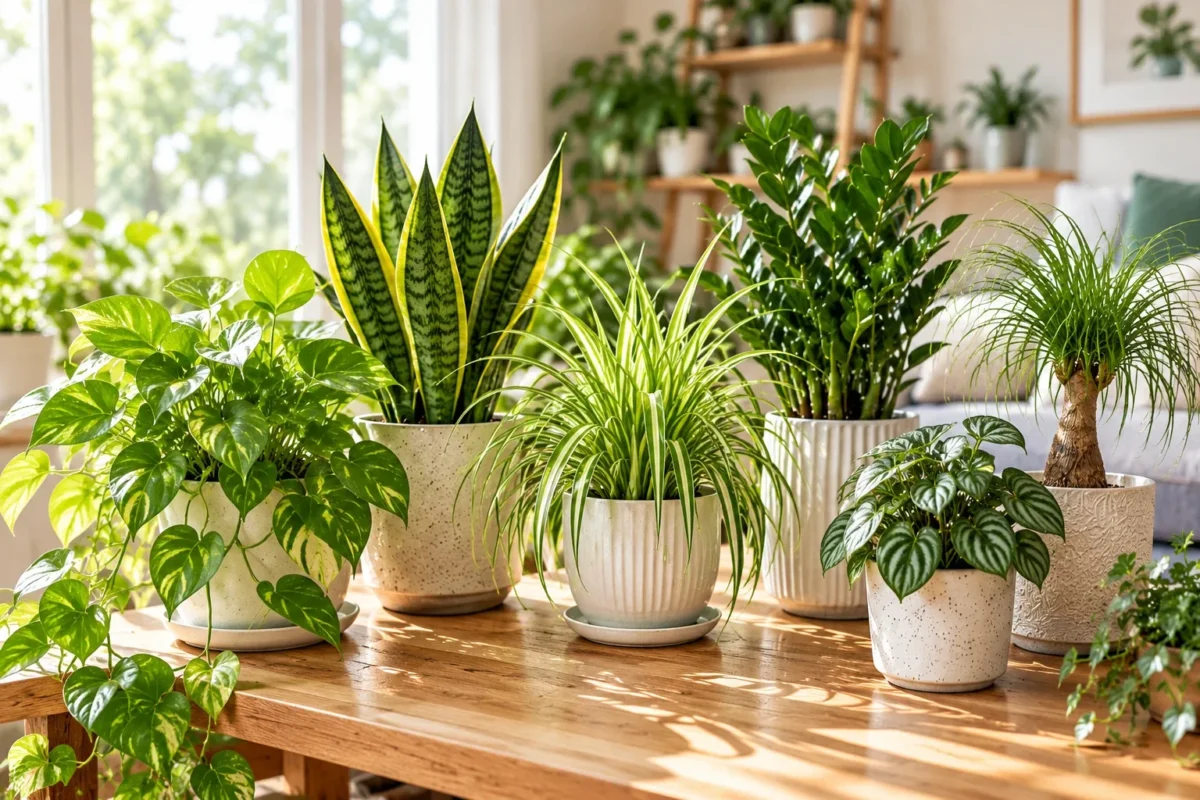
The ten plants below come from Iowa State University Extension’s guide to easy, low-maintenance houseplants. They’re all considered beginner-friendly, but they don’t all want the same care. Some handle low light well while others grow best in brighter light, and some like their soil to dry out between waterings while others prefer it evenly moist. Each plant includes its light and watering needs and a pet safety note, with links to the sources so you can check the details yourself.
What Makes a Houseplant “Easy”?
Iowa State Extension looks for houseplants that:
- Tolerate a wide range of light levels, especially low light
- Keep growing even when watering is inconsistent
- Tolerate low humidity and still look good
- Stay healthy and attractive with minimal care, for example without messy leaf drop or special fertilizers
- Bloom easily, if they’re grown for their flowers
Easy doesn’t mean no care at all. These plants simply leave more room for error while you figure out what your home and your routine can offer.
Before You Buy: Pots, Drainage, and Watering Basics
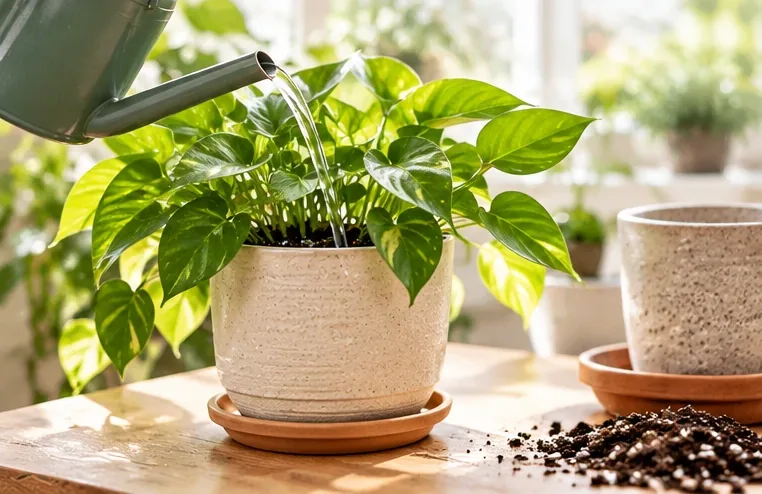
Watering is where many houseplant problems begin. Clemson Cooperative Extension’s Home & Garden Information Center (HGIC) lists over- and under-watering as major contributors to houseplant decline. It explains that too much water reduces the oxygen available to roots and makes root diseases more likely.
Clemson HGIC’s container guidance comes down to a few basics:
- Use a pot with a drainage hole and a tray. Clemson recommends both for plants potted directly in a container.
- Let the excess drain, then empty the tray. When you water, let the extra water run out through the drainage hole into the tray, then pour it out.
- Don’t leave plants sitting in water. Clemson advises against letting houseplants stand in a saucer full of water.
Quick Reference: 10 Easy Houseplants at a Glance
| Plant | Light | Watering | Pets |
|---|---|---|---|
| Pothos | Low to moderate | Let soil dry moderately between waterings | Toxic to dogs and cats (ASPCA) |
| Snake plant | Low to direct; prefers moderate | Let soil dry between waterings | Toxic to dogs and cats (ASPCA) |
| Spider plant | Prefers indirect | Average moisture | Non-toxic to dogs and cats (ASPCA) |
| ZZ plant | Does exceptionally well in low light; best in bright, indirect light | Keep on the dry side | Regarded as poisonous to people and pets if eaten (Iowa State) |
| Peperomia (P. obtusifolia) | Not specified | Let soil dry moderately between waterings | Non-toxic to dogs and cats (ASPCA) |
| Heartleaf philodendron | Low to indirect | Keep evenly moist | Toxic to dogs and cats (ASPCA) |
| Ponytail palm | Best in direct light; tolerates lower | Avoid overwatering | Non-toxic to dogs and cats (ASPCA) |
| Peace lily | Grows in low light; flowers best in indirect sunlight | Keep soil moist | Toxic to dogs and cats (ASPCA) |
| Cast iron plant | Tolerates low light | Well-drained, evenly moist soil | Non-toxic to dogs and cats (ASPCA) |
| Dragon tree | Moderate to indirect | Not specified | Toxic to dogs and cats (ASPCA) |
Light and watering notes summarize Iowa State Extension’s houseplant guide and, for the ZZ plant, its separate ZZ plant article. Pet notes come from the ASPCA’s toxic and non-toxic plant list, except for the ZZ plant, which isn’t on that list. Its note comes from Iowa State. “Non-toxic” doesn’t mean a plant is meant to be eaten. If a pet chews on any houseplant and you’re concerned, contact your veterinarian.
10 Easy Houseplants for Beginners
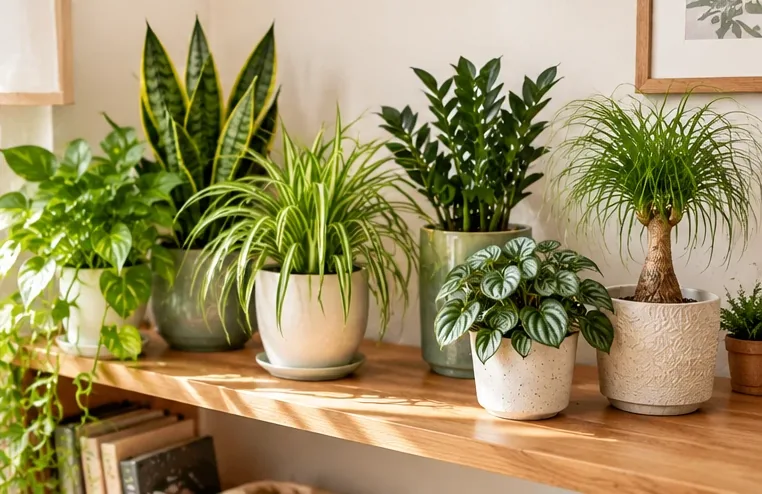
1. Pothos (Epipremnum aureum)
Iowa State Extension says pothos grows in low to moderate light and recommends letting the soil dry moderately between waterings. Pothos also roots quickly from stem cuttings, so one plant can be used to start more.
Pets: The ASPCA lists pothos (Epipremnum aureum) as toxic to dogs and cats.
Where to find it
Affiliate link: Larkmeadow may earn a commission at no additional cost to you.
Neon Pothos (Epipremnum aureum ‘Neon’) — Check current price at Plant Addicts
2. Snake Plant (Dracaena trifasciata)
According to Iowa State Extension, snake plants grow in low to direct light, though they prefer moderate light, warm temperatures, and low humidity. Iowa State recommends letting the soil dry between waterings and identifies overwatering as the main threat to this plant. For a beginner, that usually means the safer habit is to wait until the soil has dried rather than watering on a fixed schedule.
You’ll often see snake plants sold under an older name. Penn State Extension explains that this species was formerly classified as Sansevieria trifasciata and has since been moved to the genus Dracaena.
Pets: The ASPCA lists snake plant (Sansevieria trifasciata) as toxic to dogs and cats.
Where to find it
Affiliate link: Larkmeadow may earn a commission at no additional cost to you.
Laurentii Snake Plant (Sansevieria trifasciata ‘Laurentii’) — Check current price at Plant Addicts
3. Spider Plant (Chlorophytum comosum)
Iowa State Extension says spider plants prefer indirect light along with average moisture and temperatures. They also produce small plantlets, which Iowa State notes can be removed and potted up to grow new plants.
Pets: The ASPCA lists spider plant (Chlorophytum comosum) as non-toxic to dogs and cats.
Where to find it
Affiliate link: Larkmeadow may earn a commission at no additional cost to you.
Bonnie Spider Plant (Chlorophytum comosum ‘Bonnie’) — Check current price at Plant Addicts
4. ZZ Plant (Zamioculcas zamiifolia)
The ZZ plant is a good option for a dimmer room. Iowa State’s guide says it does exceptionally well in low light and is very tolerant of dry conditions and low humidity. A separate Iowa State Extension article on the ZZ plant adds that it performs best in bright, indirect light and tolerates very low light, but that direct afternoon sun can damage its foliage.
That article also recommends keeping the plant on the dry side: water thoroughly, then let the potting soil dry before watering again. Problems can develop when a ZZ plant is watered too often and its soil stays wet.
Pets and children: Iowa State Extension notes that the ZZ plant is regarded as poisonous to humans and pets if ingested, so place it where pets and children can’t chew on it. The ZZ plant isn’t included on the ASPCA’s toxic and non-toxic plant list, and its absence from that list shouldn’t be taken as a sign that it’s safe.
Where to find it
Affiliate link: Larkmeadow may earn a commission at no additional cost to you.
ZZ Plant (Zamioculcas zamiifolia) — Check current price at Plant Addicts
5. Peperomia (Peperomia obtusifolia)
Peperomia obtusifolia, sometimes called baby rubber plant, is the peperomia on Iowa State’s list. Iowa State recommends letting the soil dry moderately between waterings, noting that peperomias tolerate neglect but rot if overwatered. The guide doesn’t give a specific light recommendation for this plant.
“Peperomia” covers many species, so the care notes here apply specifically to P. obtusifolia.
Pets: The ASPCA lists Peperomia obtusifolia (baby rubber plant) as non-toxic to dogs and cats.
Where to find it
Affiliate link: Larkmeadow may earn a commission at no additional cost to you.
Marble Peperomia (Peperomia obtusifolia ‘Marble’) — Check current price at Plant Addicts
6. Heartleaf Philodendron (Philodendron hederaceum)
Heartleaf philodendron is named for its heart-shaped leaves. Unlike several plants on this list, it prefers steady moisture: Iowa State recommends keeping it evenly moist and says it grows in low to indirect light, warm temperatures, and low humidity.
Pets: The ASPCA lists heartleaf philodendron (Philodendron hederaceum) as toxic to dogs and cats.
7. Ponytail Palm (Beaucarnea recurvata)
Ponytail palm is one of the brighter-light plants here. Iowa State says it grows best in direct light but tolerates lower light. Its bulbous base stores water, so it tolerates dry conditions, and Iowa State advises avoiding overwatering. Large plants can be difficult to repot, and Iowa State suggests using a container only slightly larger than the base.
Pets: The ASPCA lists ponytail palm (Beaucarnea recurvata) as non-toxic to dogs and cats.
Where to find it
Affiliate link: Larkmeadow may earn a commission at no additional cost to you.
Ponytail Palm (Beaucarnea recurvata) — Check current price at Plant Addicts
8. Peace Lily (Spathiphyllum)
Iowa State describes peace lilies as very tolerant plants that grow in low light but flower best in indirect sunlight. They need more water than most plants on this list. Iowa State recommends keeping the soil moist, and notes that the leaves wilt when the plant is dry but revive after watering.
Pets: The ASPCA lists peace lily (Spathiphyllum) as toxic to dogs and cats.
9. Cast Iron Plant (Aspidistra elatior)
According to Iowa State, the cast iron plant endures heat, dust, low light, and lack of water better than most other houseplants. It grows best in well-drained, evenly moist soil. Frequent repotting harms it, so Iowa State recommends dividing and repotting only occasionally.
Pets: The ASPCA lists cast iron plant (Aspidistra elatior) as non-toxic to dogs and cats.
10. Dragon Tree (Dracaena marginata)
Iowa State recommends moderate to indirect light for dragon tree. It can tolerate low light, but the plants tend to bend and stretch excessively. Iowa State also notes that a dragon tree can be moved outdoors to a part-shade spot during summer.
Pets: The ASPCA lists Dracaena species, including dragon tree, as toxic to dogs and cats.
Choosing a Pot for Your New Plant
Whatever you choose, start with the drainage basics from Clemson HGIC: a pot with a drainage hole, a tray underneath to catch excess water, and no standing water left in the tray after watering.
Planters
Affiliate link: Larkmeadow may earn a commission at no additional cost to you.
Plant Addicts also carries indoor planters, including self-watering styles. If you’re shopping for one, check each product’s details to see whether it has a drainage hole. Browse planters at Plant Addicts
Common Beginner Mistakes
- Watering on a schedule instead of checking the soil. Several plants on this list, including pothos, snake plant, ZZ plant, peperomia, and ponytail palm, do best when the soil dries at least partly between waterings. Heartleaf philodendron, peace lily, and cast iron plant prefer more even moisture.
- Overwatering. Clemson HGIC links overwatering to root disease, and Iowa State warns specifically about overwatering snake plants, peperomias, and ponytail palms.
- Letting pots sit in water. Empty the tray after watering.
- Assuming “easy” means “low light.” ZZ plant and cast iron plant handle dim spots well, but ponytail palm grows best in direct light, and dragon tree stretches in low light.
- Forgetting about pets. The ASPCA lists pothos, snake plant, heartleaf philodendron, peace lily, and dragon tree as toxic to dogs and cats, and Iowa State notes that the ZZ plant is regarded as poisonous to people and pets if eaten.
Frequently Asked Questions
What is the easiest houseplant for a beginner?
All ten plants here meet Iowa State Extension’s criteria for easy, low-maintenance houseplants, so the best choice depends on your space. If your room is dim, the ZZ plant and cast iron plant are among the most tolerant of low light. If you tend to forget to water, Iowa State describes the ZZ plant and ponytail palm as tolerant of dry conditions and the cast iron plant as handling lack of water better than most houseplants.
Which of these houseplants are safe for cats and dogs?
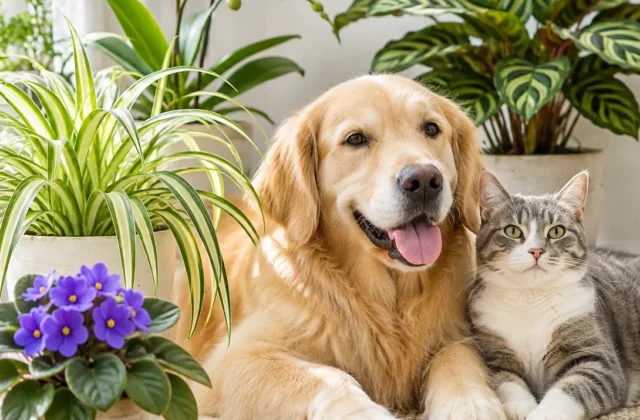
The ASPCA lists spider plant, Peperomia obtusifolia, ponytail palm, and cast iron plant as non-toxic to dogs and cats, and lists pothos, snake plant, heartleaf philodendron, peace lily, and dragon tree as toxic. The ZZ plant isn’t on the ASPCA list, but that doesn’t mean it’s safe: Iowa State Extension notes that it’s regarded as poisonous to humans and pets if ingested. If a pet chews on a houseplant and you’re concerned, contact your veterinarian. For more plants the ASPCA lists as non-toxic to both cats and dogs, see our guide to pet-safe houseplants.
Do I need a pot with a drainage hole?
Clemson HGIC recommends a drainage hole and a tray to catch excess water for plants potted directly in a container, and advises against letting houseplants stand in a saucer full of water.
Which of these plants do best in low light?
Iowa State describes the ZZ plant as doing exceptionally well in low light and the cast iron plant as enduring low light better than most other houseplants. Pothos, heartleaf philodendron, and peace lily also grow in low light, and snake plant tolerates it, although it prefers moderate light. Ponytail palm and dragon tree want more light.
Getting Started
Pick one or two plants that match the light you actually have, put them in pots that drain, and water when the soil is ready rather than on a fixed schedule. Once those are doing well, it’s easy to add more.
If you’d like to grow food in containers too, our balcony and container vegetable gardening guide covers pots, potting mix, and light for edible plants.
Sources
- Iowa State University Extension and Outreach: Easy Low-Maintenance Houseplants
- Iowa State University Extension and Outreach: The ZZ Plant
- Clemson Cooperative Extension HGIC: Houseplant Diseases & Disorders
- Clemson Cooperative Extension HGIC: Indoor Plants – Cleaning, Fertilizing, Containers & Light Requirements
- Penn State Extension: Snake Plant: A Forgiving, Low-Maintenance Houseplant
- ASPCA Animal Poison Control: Toxic and Non-Toxic Plants