
A leaf full of tiny holes, a tomato plant missing half its leaves, a squash vine that was fine yesterday and flat today. Before you fix the problem, you need to know what caused it, and most insects in a garden aren’t pests.
Mississippi State University Extension puts it reassuringly: many pests can show up in a home garden, but they don’t usually appear all at once, and you don’t have to spend the summer spraying to have a successful garden.
This guide covers common U.S. vegetable garden pests: what they look like, the damage they leave, and what to do first. Which pests you see, and when, depends on where you live. The sources here include a Southern guide (Mississippi State) and a Northern one (University of Minnesota Extension), and their timing often differs, so check with your local Extension office too.
Start With the Damage, Then Find the Culprit
Damage is a clue, not an answer. Different pests cause similar symptoms, and some “insect damage” is really disease or weather. Use the damage to decide where to look, then find the pest itself on leaf undersides, stems, or the soil before you act.
Mississippi State groups insect damage into a few broad types:
- Chewing damage. Holes, ragged edges, or missing leaves usually point to caterpillars or beetles.
- Sap-sucking damage. Curled, yellowed, stippled, or spotted leaves can point to aphids, whiteflies, squash bugs, or spider mites.
- Wilting or collapse. A plant that suddenly wilts, or a seedling cut off at the soil line, can point to something feeding inside the stem or at its base.
Quick Reference: Common Pests at a Glance
| Pest | What you’ll notice | Where to look |
|---|---|---|
| Tomato hornworm | Large leaves stripped; dark droppings | Upper tomato leaves |
| Cabbage caterpillars | Holes in cabbage-family leaves | Under leaves; heads |
| Flea beetles | Tiny “shot holes” | Leaves of young plants |
| Cucumber beetles | Chewed seedlings and leaves | Squash-family plants |
| Colorado potato beetle | Leaves stripped | Potato, eggplant |
| Mexican bean beetle | Chewed bean leaves | Under bean leaves |
| Aphids | Curled, sticky leaves | New growth; under leaves |
| Squash bugs | Wilting, yellow-brown spots | Plant base; under leaves |
| Stink bugs | Corky spots on tomatoes | Fruit and pods |
| Spider mites | Stippled leaves, fine webbing | Under leaves |
| Whiteflies | Tiny white insects fly up | Under leaves |
| Squash vine borer | Large plant wilts suddenly | Stem near the base |
| Cutworms | Seedlings cut at soil level | Soil around the stem |
| Slugs (not insects) | Irregular holes; shiny slime trails | Under debris by day; plants at night |
Sources: Mississippi State and University of Minnesota Extension.
Common Vegetable Garden Pests
Tomato Hornworm (and Tobacco Hornworm)
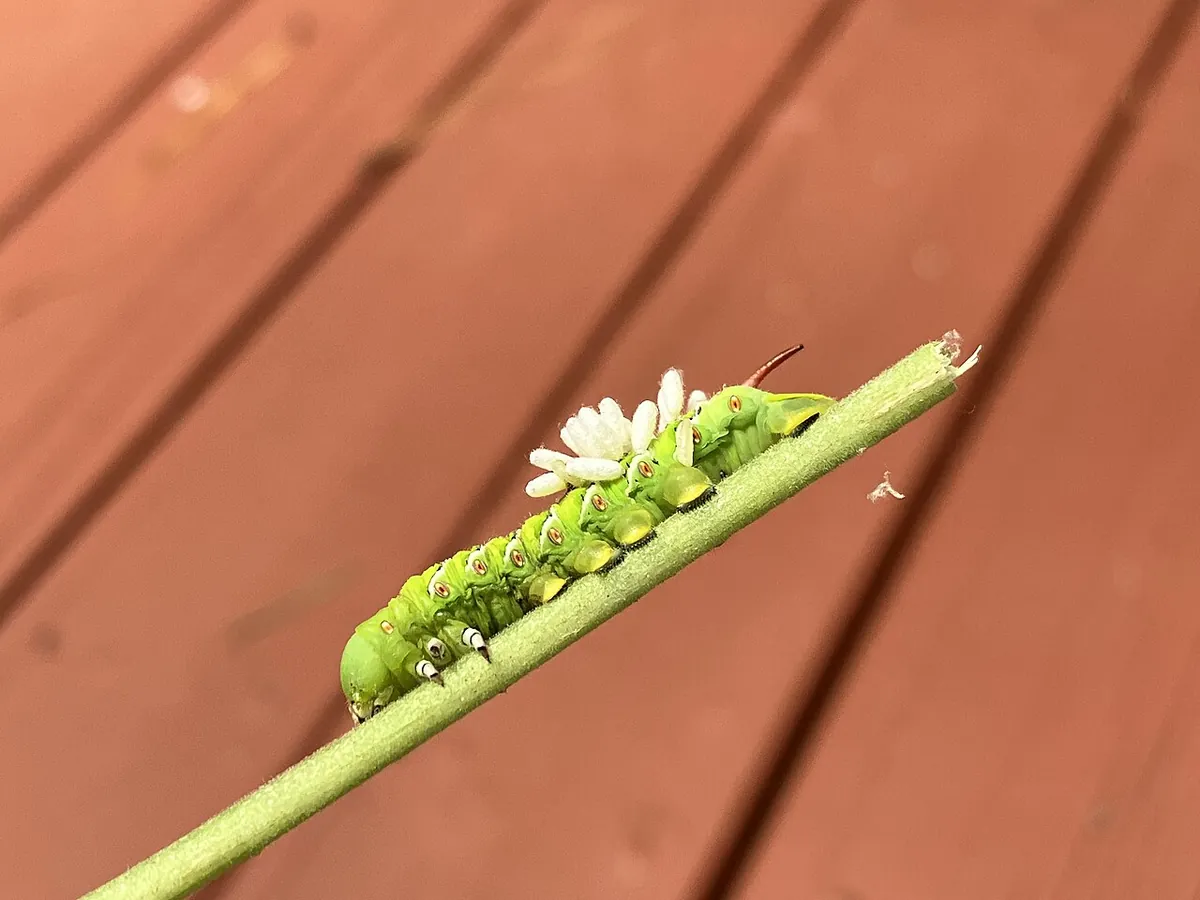
What it looks like: A large green caterpillar with a horn on its rear end. University of Minnesota Extension says hornworms can reach about four inches long, and that large tomato hornworms have white, V-shaped marks along each side and a black horn. Mississippi State notes that in its region, the closely related tobacco hornworm is seen more often; it usually has white diagonal stripes and a reddish horn.
Signs of damage: Missing leaves, usually starting near the top of the plant, and dark green or black droppings on the leaves below. They blend in so well that much of the damage may be done before you spot them. They mainly feed on tomatoes, occasionally peppers, eggplant, and potatoes.
What to do first: Hand-pick them. Minnesota Extension calls this the most effective way to manage hornworms and recommends checking tomato plants at least twice a week in summer.
Before you pick: If a hornworm has small white cocoons on its back (Minnesota Extension says they look like white rice), leave it in the garden. The cocoons belong to a tiny parasitic wasp whose larvae fed inside the hornworm, and the wasps kill it when they emerge. Minnesota Extension explains that the new adult wasps then look for other hornworms to parasitize. Destroying that hornworm destroys the next generation of wasps, too.
Cabbage Caterpillars
What they look like: Mississippi State describes three common green caterpillars on cabbage, broccoli, kale, collards, and other cabbage-family crops:
- Imported cabbageworm: velvety green, a little over an inch long. The adult is the familiar white butterfly with black wing tips.
- Cabbage looper: pale green with a white stripe along each side; it moves in an inchworm-like loop.
- Diamondback moth larva: small (under half an inch) and wiggles violently or drops off the plant when touched.
Signs of damage: Holes in leaves, caterpillars boring into heads, and droppings. Mississippi State notes that young loopers may leave clear “windowpane” patches by eating only the underside of a leaf.
What to do first: Minnesota Extension recommends row covers (lightweight fabric that keeps moths and butterflies from laying eggs) and checking early and often for eggs to squish.
Flea Beetles
What they look like: Very small beetles that jump like fleas when disturbed. Mississippi State notes they can be black, brown, or striped, depending on the species.
Signs of damage: Leaves peppered with tiny “shot holes.” Mississippi State notes that large numbers can destroy new transplants of sensitive crops like eggplant. Minnesota Extension adds that they favor “spicy” cabbage-family crops like arugula and mustard.
What to do first: Minnesota Extension suggests larger, healthy transplants, which better withstand feeding, and row covers right after planting. Our guide to starting vegetable seeds indoors covers growing sturdy transplants.
Cucumber Beetles
What they look like: Small beetles, about three-sixteenths of an inch long. Mississippi State describes the striped cucumber beetle as black and yellow striped, and the spotted cucumber beetle as yellow with black spots.
Signs of damage: Chewed leaves and seedlings on cucumbers, squash, and melons. Mississippi State notes that damage is greatest on emerging seedlings, while plants taller than about six inches are less likely to be killed. Minnesota Extension adds that the striped cucumber beetle can spread bacterial wilt, a disease that kills plants.
What to do first: Both sources recommend row covers for young plants. Minnesota Extension suggests keeping them on until flowering, since squash and cucumbers need insects to pollinate. Once the covers come off, keep checking for beetles. Our companion planting guide also covers using Blue Hubbard squash as a trap crop for cucumber beetles.
Colorado Potato Beetle
What it looks like: Mississippi State describes the adult as round and dome-shaped with black and tan stripes. The larvae are reddish-orange with black markings, and the yellow, oblong eggs are laid in clusters on leaves.
Signs of damage: Adults and larvae eat leaves and can strip potato plants. It also feeds on eggplant, tomatoes, and peppers.
What to do first: Hand-pick beetles, larvae, and egg clusters, and use row covers to keep adults off. Mississippi State also recommends controlling horse nettle and other weeds that host this beetle.
Mexican Bean Beetle
What it looks like: One of the few plant-eating lady beetles. Mississippi State describes the adult as copper colored with 16 small black spots, and the larvae as yellow and covered in black-tipped spines.
Signs of damage: Adults and larvae feed on bean leaves, preferring lima and snap beans.
What to do first: Check bean leaf undersides for spiny yellow larvae and egg clusters. Mississippi State says hand-picking helps when numbers are low. It also notes infestations are rare in Mississippi, so how often you see it depends on your region.
Aphids
What they look like: Soft-bodied, pear-shaped insects, 1/16 to 1/8 inch long, in many colors, according to Minnesota Extension. The best identifier is two small “tailpipes” (cornicles) at the end of the body. Look for clusters on new growth and leaf undersides.
Signs of damage: Heavy infestations can cause curled, yellowed leaves and poor growth. Aphids also produce sticky honeydew, on which black sooty mold can grow.
What to do first: Look for natural enemies first; both sources note that beneficial insects usually keep aphids in check. Mississippi State suggests knocking off small clusters with a spray of water and avoiding unnecessary insecticides.
Squash Bugs
What they look like: Mississippi State describes adults as brown, about five-eighths of an inch long, and similar to stink bugs but longer and more oval. The nymphs are smaller, dusty gray, and wingless. Look for clusters of brown, oval eggs, usually on leaf undersides.
Signs of damage: Adults and nymphs suck sap from squash, pumpkins, and related plants, causing wilting and yellow-brown spots. Mississippi State notes that large numbers can make small plants wilt and die overnight.
What to do first: Check leaf undersides for egg clusters from early summer and squish them. Minnesota Extension suggests knocking nymphs into a bucket of soapy water. Both sources recommend cleaning up old squash plants and fruit, where squash bugs overwinter.
Stink Bugs
What they look like: Brown or green shield-shaped insects with a strong odor when disturbed. Their barrel-shaped eggs are laid in clusters on leaves.
Signs of damage: Stink bugs feed on fruit and seeds. On tomatoes, Mississippi State notes their feeding leaves white or yellow corky spots under the skin. In Mississippi they’re most common in late summer and fall.
What to do first: Hand-pick egg clusters, nymphs, and adults in small plantings. Mississippi State also suggests planting early to avoid the late-season peak.
Spider Mites
What they look like: Not insects, but tiny relatives of spiders, so small that individual mites are hard to see. Minnesota Extension describes the common twospotted spider mite as about 1/50 inch long and yellow-orange with a dark spot on each side. They feed mostly on leaf undersides.
Signs of damage: Finely speckled or “stippled” leaves that can turn bronzed or bleached. Mississippi State notes that webbing usually means a severe infestation. Cucurbits, beans, tomatoes, and eggplant are common targets. Minnesota Extension notes that outbreaks favor hot, dry weather and that symptoms can be confused with drought stress.
What to do first: Confirm the mites. Minnesota Extension suggests checking discolored leaves’ undersides with a hand lens, or shaking a leaf over white paper and looking for mites that fall. Then:
- Water well. Both sources note that drought stress favors spider mites. As a general guideline, Minnesota Extension suggests about an inch of water a week for most plants, plus mulch, but it also warns against overwatering.
- Hose them off. A strong spray of water can dislodge mites and wash away their webbing.
- Protect natural enemies. Predatory mites and certain lady beetles eat spider mites; long-lasting insecticides kill them and may make mite problems worse.
- Keep checking every three to five days, especially in dry spells.
Insecticidal soap and horticultural oil kill only the mites they contact, so Minnesota Extension advises covering leaf undersides and notes repeat applications may be needed. It warns against homemade soap solutions, which can damage plants.
Whiteflies
What they look like: Mississippi State describes them as aphid-sized with white, moth-like wings; they fly up in a small cloud when disturbed. The flat, scale-like young don’t move, and both stages feed on leaf undersides.
Signs of damage: Like aphids, they suck sap, leave sticky honeydew, and can spread plant diseases.
What to do first: Don’t spray without a clear need. Mississippi State warns that some common insecticides can make whitefly problems worse, and that it’s better not to spray than to spray the wrong product.
Squash Vine Borer
What it looks like: Mississippi State describes the adult as a reddish-orange and black, day-flying moth often mistaken for a paper wasp. Its caterpillars tunnel inside squash and pumpkin stems, so you’ll usually see the damage first.
Signs of damage: A large, healthy-looking squash or pumpkin plant that suddenly wilts and dies. Mississippi State explains that once the larvae are more than an inch long, their feeding inside the stem causes the collapse.
What to do first: Minnesota Extension suggests row covers until plants begin to flower. For an infested plant, it suggests cutting into the base of the stem to remove the larvae, or removing the plant. Both sources stress cleanup after harvest. Mississippi State adds that zucchini is attacked less often than yellow summer squash.
Cutworms
What they look like: Caterpillars that hide in the soil, so you’ll usually notice the damage first.
Signs of damage: Mississippi State describes young transplants and seedlings cut off near the soil line. Larger plants are less vulnerable.
What to do first: Mississippi State recommends wrapping the lower stems of new transplants with a “cutworm collar” made from a strip of paper or aluminum foil, and tilling the garden at least three weeks before planting.
Not an Insect: Slugs
What they look like: Slugs are mollusks, like snails without shells. Minnesota Extension describes them as slimy, legless, and usually brownish or grayish, from about 1/4 inch to two inches or longer.
Signs of damage: Irregular holes in leaves, flowers, and fruit, plus dried, shiny slime trails. Because they feed at night, the damage is easy to blame on an insect. Mississippi State notes they matter most on leafy crops like lettuce; Minnesota Extension notes seedlings are most at risk, especially in cloudy, rainy weather.
What to do first: Minnesota Extension suggests these steps:
- Check at night. Go out in the evening with a flashlight to find them feeding.
- Hand-pick and trap. Drop slugs into soapy water, or lay flat boards on the soil and check under them the next morning. Mississippi State notes that beer traps can aid control in small plantings, but they work best alongside the other steps, not as a complete fix.
- Remove hiding places like stones, containers, and plant debris. Mississippi State notes that organic mulches can favor slugs.
- Water in the morning at the base of plants, so plants dry before slugs become active in the evening.
Slug baits exist if those steps aren’t enough, but Minnesota Extension warns that some are very toxic to dogs and other animals, so read the label carefully.
Don’t Squash the Good Guys: Beneficial Insects That Look Like Pests
Penn State Extension notes that most insects in a landscape are harmless, and some are doing pest control for you:
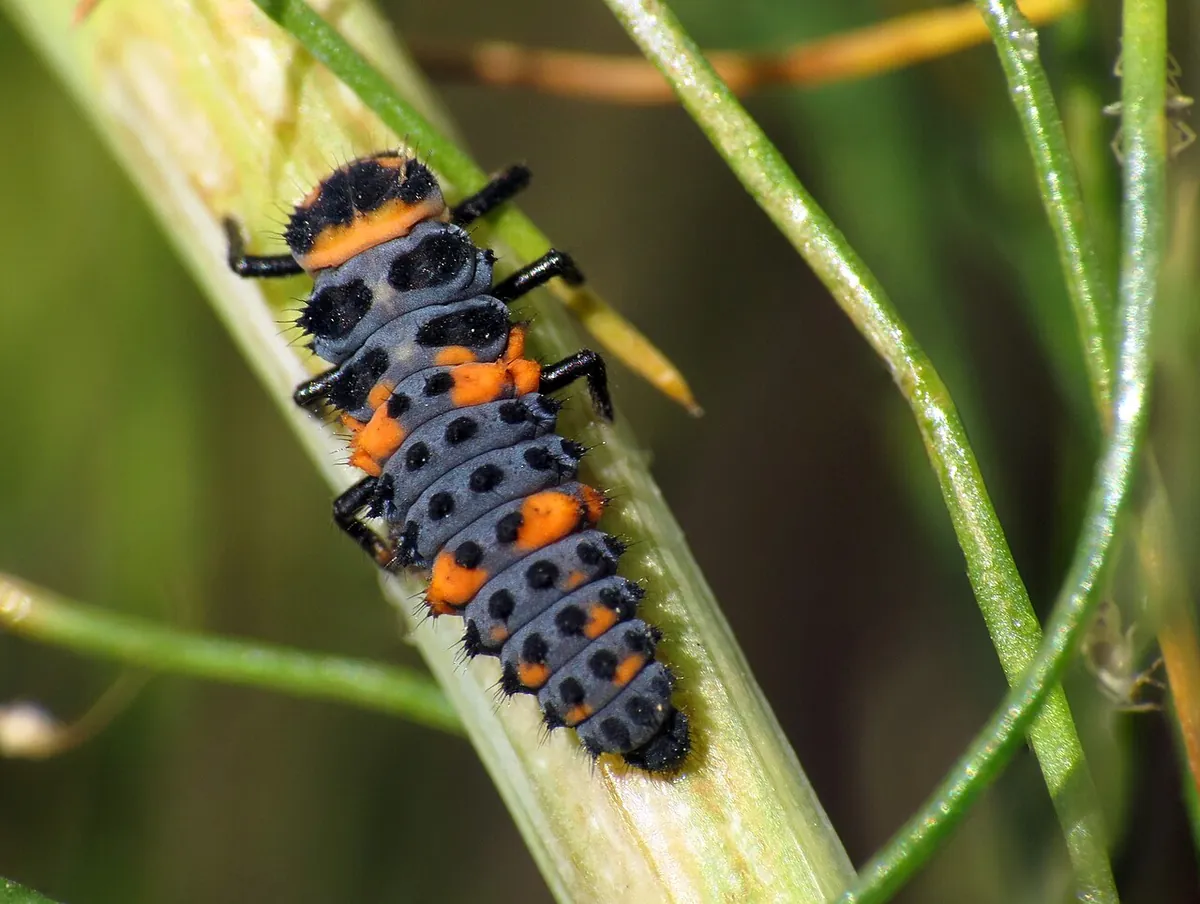
- Lady beetle larvae. Penn State describes them as looking “somewhat like tiny black and orange alligators,” nothing like the adults. They’re often found near the aphid colonies they eat.
- Lady beetle eggs. Orange or yellow, spindle-shaped, and laid in groups. Don’t confuse lady beetle larvae with the spiny yellow Mexican bean beetle larvae.
- Lacewings. Adults are green or brown with delicate, lacy wings, and their eggs sit on thin stalks. Penn State notes the larvae are especially voracious predators.
- Syrphid flies (hover flies). They hover around flowers like tiny bees, and their small, slug-like larvae eat aphids.
- Parasitized pests. White or brown cocoons on a caterpillar’s back, or swollen, mummified aphids, are signs that tiny parasitic wasps are already at work.
- Paper wasps. Mississippi State notes that they carry off caterpillars to feed their young.
Mississippi State notes that unnecessary spraying can kill beneficial insects and let pest populations increase. Planting a variety of flowers also helps; our companion planting guide covers what the research says about flowers for beneficial insects.
How to Check Your Garden for Pests
Our suggestion: make scouting a quick habit, about twice a week (Minnesota Extension’s routine for hornworms):
- Turn leaves over. Aphids, squash bug eggs, spider mites, and whiteflies live on leaf undersides.
- Check stems and soil. Squash bugs gather at the base; cutworms hide in the soil.
- Watch young plants. Seedlings are most vulnerable to flea beetles, cucumber beetles, cutworms, and slugs.
- Keep notes on what you found, on which crop, and when.
First Steps Before Reaching for a Spray
The first line of defense doesn’t come in a bottle:
- Hand-pick large pests and squish egg clusters.
- Use row covers on young plants, and remove them when crops that need pollinators start to flower. Keep scouting after that.
- Knock aphids off with a spray of water.
- Clean up finished plants and fallen fruit.
- Keep plants healthy. Mississippi State notes that vigorous plants are generally more resistant and more tolerant of insect damage.
If you do use a product, match it to the pest you’ve identified. Lower-risk options are narrower than they sound. Minnesota Extension notes that Bt (Bacillus thuringiensis) products for caterpillars must be eaten to work and work best on young caterpillars, and that insecticidal soap must contact the insect directly and leaves no residue to keep working. Mississippi State notes that the diamondback moth resists many insecticides, including Bt.
Before applying anything, read the label. Minnesota Extension says to confirm that the crop is listed and to observe the waiting period between application and harvest. Also check that your pest is listed and follow the directions exactly. Your county Extension office can recommend options for your area.
Frequently Asked Questions
What’s making holes in my plant’s leaves?
Many tiny, round holes often point to flea beetles; look for tiny beetles that jump. Larger, irregular holes may be caterpillars, beetles, or slugs, so check at night if you find nothing by day.
Why did my squash plant wilt overnight?
On a large plant, check the stem base for squash vine borers. On smaller plants, look under the leaves for squash bugs, gray nymphs, and egg clusters. Disease or drought can also cause wilting, so find the insect before deciding.
Do I need to spray my garden?
Often, no. Mississippi State notes that it’s rarely necessary, and often counterproductive, to spray every crop in the garden. Start with hand-picking, row covers, and cleanup.
Getting Started
You don’t need to memorize every pest. Check regularly, turn leaves over, and make sure an unfamiliar insect isn’t a beneficial one before you act.
Still planning your first garden? Our beginner’s guide to starting a vegetable garden covers choosing a spot, preparing soil, and picking easy crops.
Sources
- Mississippi State University Extension: Insect Pests of the Home Vegetable Garden (Publication 2347, Blake Layton)
- Mississippi State University Extension: Common Garden Pests
- Mississippi State University Extension: Five Common Garden Insect Pests
- University of Minnesota Extension: Common insects in vegetable crops
- University of Minnesota Extension: Tomato hornworms
- University of Minnesota Extension: Aphids
- University of Minnesota Extension: Spider mites
- University of Minnesota Extension: Slugs
- Penn State Extension: Recognize and Conserve Natural Enemies