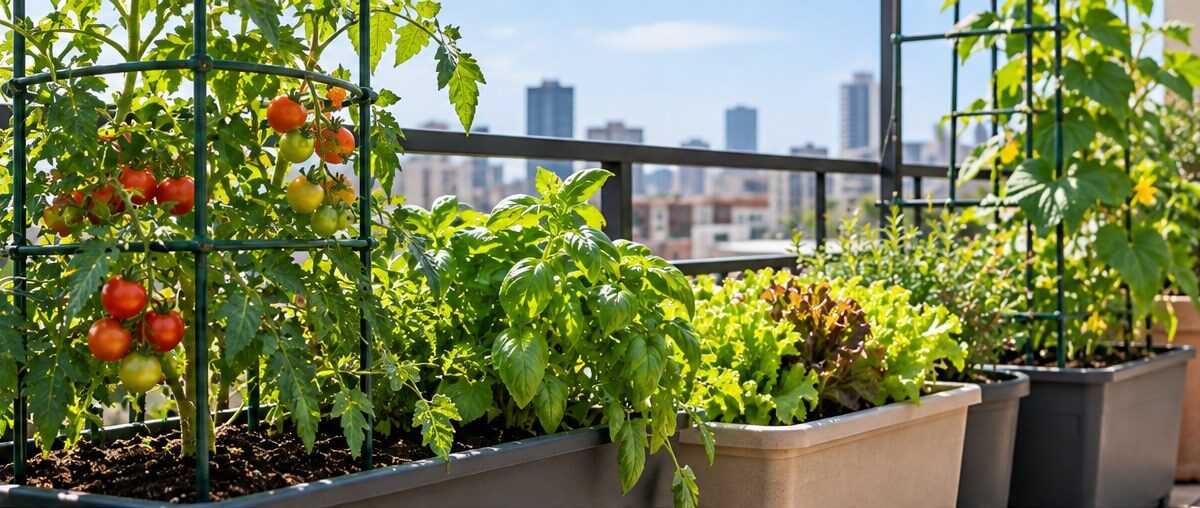
Not having a yard doesn’t mean you can’t grow your own vegetables. A balcony, a small patio, or even a sunny doorstep can support a productive container garden — it just works a little differently from planting in the ground. Containers dry out faster, have a limited volume of soil to work with, and in a rented space, come with a few practical questions worth settling before you buy anything.
This guide walks through what actually matters for growing vegetables in containers: what to check with your building first, how much sun you really need, how to choose a container that won’t leave your plants struggling, and which crops tend to do well in this kind of setup.
Checking What Your Building Allows
Before buying pots or soil, it’s worth finding out what your lease or building rules actually allow. Some buildings restrict what can go on a balcony, and weight, drainage, and appearance rules vary a lot between properties. A quick conversation with your landlord or property manager can save you from having to undo your setup later.
It’s also worth thinking about drainage from the start. Water running off a balcony onto a walkway or a neighbor’s space below is a common source of complaints, so plan on using saucers under your containers or a spot where runoff won’t be an issue.
Assessing Your Sunlight
Sunlight is usually the single biggest factor in what you’ll be able to grow successfully. Most fruiting vegetables — tomatoes, peppers, cucumbers, squash — need somewhere in the range of 6 to 8 hours of direct sun a day to produce well. Leafy greens and some other crops, such as beets and radishes, are more shade-tolerant and can do reasonably well with less direct sun than fruiting vegetables need.
One advantage of containers over an in-ground garden is that they’re portable. If your balcony’s sun pattern changes through the season, or your first spot turns out to be shadier than expected, you can move pots to chase better light rather than being stuck with a fixed planting bed.
Spend a day actually watching how the light moves across your space before deciding where to put your containers — a spot that looks bright in the morning can be fully shaded by afternoon, and the reverse is just as common.
Choosing the Right Container
Drainage Comes First
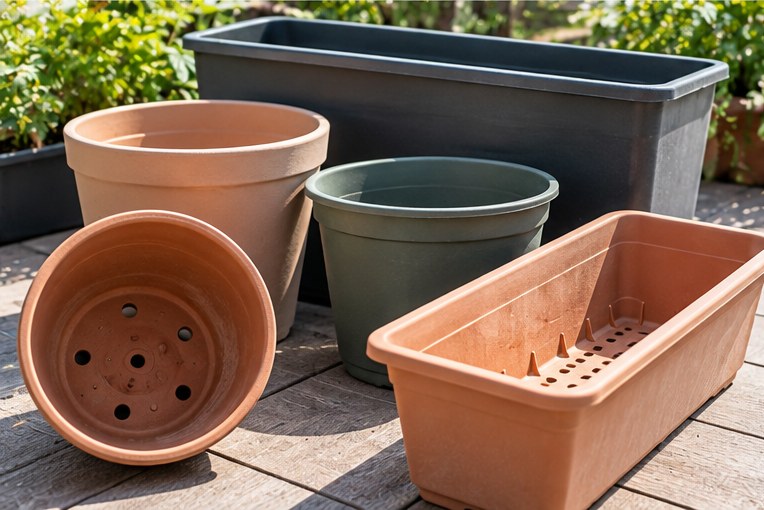
Whatever container you choose, it needs a way for excess water to escape. Standing water at the bottom of a pot leads to waterlogged, oxygen-starved roots and is one of the more common ways container plants fail. If a container doesn’t already have drainage holes, small holes can be added to the bottom — university extension guidance generally recommends several small holes rather than one large one, since oversized holes let soil wash out with every watering.
It’s also worth knowing that lining the bottom of a pot with gravel or pot shards, a very common piece of folk advice, doesn’t actually improve drainage. Research from extension horticulture programs has found that this layer can instead raise the water table within the pot, holding water closer to the roots rather than helping it drain away. A container with proper drainage holes doesn’t need this extra layer.
Sizing for the Root System
Container size needs to match what you’re growing, and this is where a lot of new container gardeners underestimate what a vegetable plant actually needs. University of Maryland Extension publishes minimum container sizes for common crops, and the figures vary more by vegetable than you might expect:
- Leaf lettuce: ½ gallon minimum
- Beets: ½ gallon minimum
- Bush beans: 2 gallons minimum
- Swiss chard: 2 gallons minimum
- Carrots: 2 gallons minimum
- Cherry tomatoes: 2 gallons minimum
- Cucumbers: 5 gallons minimum
- Eggplant: 5 gallons minimum
- Peppers: 5 gallons minimum
- Standard (full-size) tomatoes: 5 gallons minimum
- Summer squash: 10 gallons minimum
These are minimums, not ideal sizes. Bush, dwarf, or compact varieties can generally get by with a smaller container than their full-size counterparts, but going larger than the minimum tends to help rather than hurt — for tomatoes specifically, UMD Extension notes that plants grown in more room than the minimum will grow larger and produce more fruit, even though a 5-gallon pot is enough to grow one successfully.
Undersized containers are a common reason container vegetables stall out or produce far less than expected — the plant simply runs out of room for its roots and can’t take up enough water and nutrients to keep up with the top growth.
Potting Mix vs. Garden Soil
It’s tempting to fill containers with soil dug from a garden bed or a bag of generic “topsoil,” but university extension sources are fairly consistent on this point: don’t. Garden soil compacts once it’s confined in a pot, which leads to poor drainage and aeration, and it also tends to shrink away from the sides of the container as it dries, making even watering difficult. Garden soil can also carry weed seeds and disease organisms that a packaged mix is generally free of.
Potting mix, by contrast, is specifically formulated for container growing. It’s typically a soilless blend of ingredients like peat moss, coconut coir, perlite, and vermiculite, chosen to stay loose and well-aerated while still holding moisture and nutrients well enough to support the plant. Since a containerized plant can’t send roots out to search for water and nutrients the way an in-ground plant can, the growing medium itself has to do more of that work — which is exactly what potting mix is designed for. For containers, potting mix (sometimes labeled “container mix”) is the better choice; garden soil is best reserved for in-ground beds.
Vegetables and Herbs That Do Well in Containers
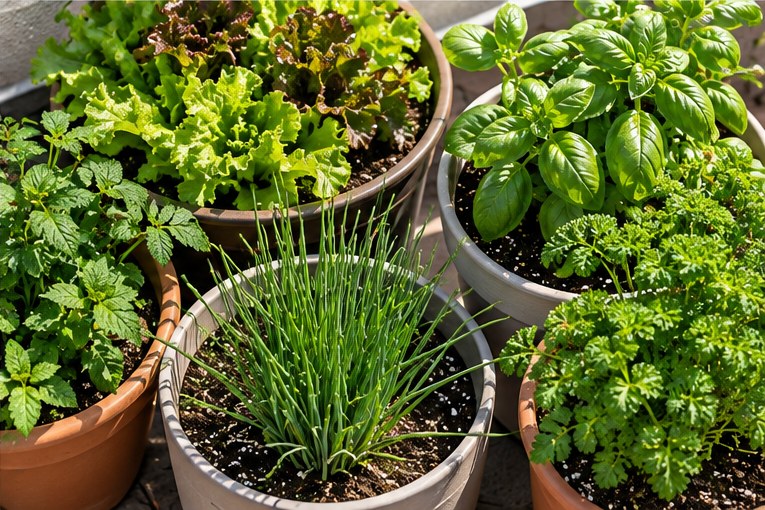
Not every vegetable is an equally good fit for pot culture, especially in a compact space. Crops that tend to do well include:
- Leafy greens (lettuce, spinach, chard) — shallow-rooted, quick to mature, and tolerant of a bit less sun
- Radishes — fast-growing and well suited to small containers
- Bush beans — compact and productive without needing much support
- Peppers — manageable size, though they need a larger container as described above
- Determinate (“bush”) tomato varieties — generally better suited to containers than sprawling indeterminate types
- Herbs like basil, thyme, oregano, and rosemary in full sun, or parsley, cilantro, chives, and mint where the spot gets a bit less light
If herbs are your main interest, our guide to starting an herb garden, indoors or out compares ten beginner-friendly herbs and covers growing them on a sunny windowsill, too.
Root vegetables that need deep, loose soil (carrots in particular) can work in containers but require enough depth to avoid stunted or misshapen roots, so check the specific variety’s needs before choosing a pot.
Growing Vertically to Save Space
If your container space is limited but you have some vertical room — a railing, a wall, or just height above your pots — vertical growing can meaningfully increase what you’re able to grow without needing more floor space. Vining crops like pole beans, peas, and cucumbers are well suited to a trellis, netting, or a simple string support, since they naturally climb rather than sprawl.
Heavier fruiting vines, like squash or melons, generally need a sturdier support than a lightweight trellis, or a sling to support the fruit’s weight as it grows — otherwise the vine can be strained or the support itself can tip. For container use, make sure any trellis or stake is anchored securely enough that wind or the plant’s own weight won’t topple the whole container, especially in an elevated, more exposed balcony spot.
Watering Containers
Containers dry out faster than garden soil, sometimes considerably faster, since there’s a limited volume of soil exposed to sun and wind on multiple sides rather than surrounded by cooler ground. During hot weather, container vegetables may need water daily, and sometimes more than once a day for smaller pots in full sun.
Rather than watering on a fixed schedule, check the soil directly by feeling an inch or two down. A reliable method is to water until it runs freely out of the drainage holes, which helps ensure moisture reaches the full root zone rather than just wetting the surface. Consistent moisture matters more for containers than for in-ground beds, since there’s less soil volume to buffer against a missed watering.
Feeding Container Vegetables
Potting mix doesn’t hold nutrients indefinitely. Between what the plant itself takes up and what washes out each time water drains through the pot, nutrient levels in container soil decline faster than they would in the ground — so feeding is generally part of container vegetable care, not an optional extra.
Before adding anything, check whether your potting mix already contains fertilizer. Many commercial mixes do come with a slow-release fertilizer built in, but according to Iowa State University Extension, this typically doesn’t last the full growing season, so an already-fertilized mix still needs a follow-up feeding later on, just not necessarily right away.
How and how often you feed from there depends on what you’re using. Water-soluble fertilizers are generally applied on a fairly frequent cycle, while granular or slow-release products are applied less often and worked into the surface instead. Rather than following a single fixed schedule, check the product label on whatever fertilizer you buy — application rates and frequency vary by product, and the label is the most reliable source for how to use that specific one. If you’re fertilizing a specific vegetable, it’s also worth checking whether that crop has its own feeding recommendations, since needs can vary by plant.
When in doubt, err on the side of following the label rather than adding extra “to be safe” — more fertilizer than a plant can use doesn’t translate into better growth, and can just as easily cause problems.
Wind and Weight: Keeping Things Safe
Elevated spaces like balconies are often windier than ground-level yards, and a tall or top-heavy container can become unstable in a gust. Grouping containers together, choosing wider-based pots for taller plants, and securing trellises well all help reduce this risk.
Weight is worth thinking about too, particularly for upper-floor balconies. Soil gets significantly heavier once it’s watered, and a full set of containers can add up to real weight over time. Building safety requirements vary by property and local code, so rather than relying on a general number, it’s worth checking directly with your landlord or property manager about what your specific balcony can safely support before setting up a full container garden.
Common Mistakes to Avoid
- Choosing a container that’s too small for the vegetable’s mature root system
- Using garden soil instead of potting mix, which compacts and drains poorly in a container
- Skipping drainage holes, or blocking them with a gravel layer that doesn’t actually help
- Watering on a fixed schedule instead of checking actual soil moisture, especially in hot weather
- Not checking building rules or weight considerations before setting up a full container garden
Frequently Asked Questions
Can I grow vegetables in containers without any real gardening experience?
Yes. Containers actually give you more control than an in-ground garden in some ways — you control the soil, drainage, and can move plants to chase better light, which makes early mistakes easier to fix.
Do I need special “container” vegetable varieties?
Not necessarily, though some crops (like bush/determinate tomatoes rather than sprawling indeterminate ones) are simply a better practical fit for pot culture.
How is watering different from an in-ground garden?
Containers generally need more frequent watering, since there’s less soil volume to hold moisture and they’re exposed to drying wind and sun from more sides.
What if my balcony doesn’t get much direct sun?
Focus on leafy greens, herbs that tolerate partial shade like mint and parsley, and crops such as beets and radishes, which generally handle lower light better than fruiting crops like tomatoes and peppers.
