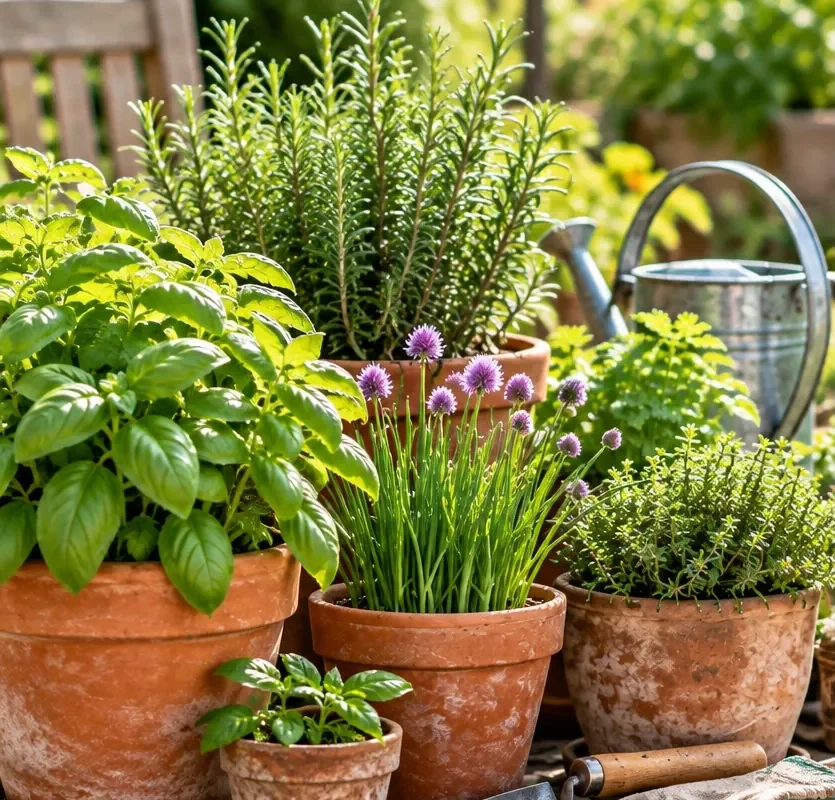
Fresh herbs are one of the easiest ways to get started growing your own food. A pot of basil by the back door or a few clumps of chives along the patio can keep your kitchen supplied, and you don’t need much space to grow them.
Clemson Cooperative Extension puts it simply: most herbs are easy to grow. Many tolerate drought, don’t need very fertile soil, and are naturally resistant to insects and diseases. That makes herbs a forgiving first garden, whether you plant them in the ground, in a raised bed, in containers, or on a sunny windowsill.
This guide focuses on growing herbs outdoors, with a full section on growing them indoors. Keep in mind that herbs are a diverse group, and needs can vary by type and variety. The sources here include Northern (University of Minnesota) and Southern (Clemson and Mississippi State) Extension guides, and their advice sometimes differs with climate.
Start Small: Plan Around the Herbs You’ll Use
You don’t need a formal herb garden. University of Illinois Extension notes that a carefully designed garden devoted only to herbs is charming but often not necessary or practical. A few square feet outside the kitchen window or along the patio can supply plenty of fresh herbs, and herbs also mix well into a vegetable garden or a flower bed.
Our suggestion: start with three to five herbs you already cook with, and plant them where you’ll walk past them every day. Herbs get used more when they’re easy to reach.
Know Your Herbs: Annuals, Perennials, and Two Big Families
Many common culinary herbs belong to one of two plant families, and University of Minnesota Extension notes that each family tends to prefer slightly different conditions:
- The mint family includes basil, oregano, marjoram, mint, rosemary, thyme, lavender, summer savory, and sage. Once established, these tend to tolerate heat and dry soil.
- The carrot family includes dill, parsley, chervil, cilantro, fennel, and lovage. These prefer slightly moist soil with good depth and drainage.
It also helps to know whether an herb is an annual or a perennial. Annuals like basil, cilantro, and dill grow for one season. Perennials like chives, mint, oregano, and thyme come back year after year where they’re hardy. Parsley is technically a biennial, but Mississippi State suggests treating it as an annual, since you grow it for its first-year leaves.
10 Easy Herbs for Beginners
This table compares ten common herbs. Use it as a starting point, since needs can vary by variety and climate.
On a phone, swipe the table sideways to see all five columns.
| Herb | Type | Sun | Water | Containers & indoors |
|---|---|---|---|---|
| Basil | Annual | Full sun | Don’t let it dry out | Good indoors; keep above 50°F |
| Chives | Perennial | Full sun | Water regularly | Good indoors; tolerates lower light |
| Cilantro | Annual | Sun to part shade | Slightly moist | Good indoors; tolerates lower light |
| Dill | Annual | Full sun | Slightly moist | Needs a deep pot |
| Mint | Perennial | Part shade | Moist | Keep in its own pot |
| Oregano | Perennial | Full sun | Let dry slightly | Good container herb |
| Parsley | Biennial | Light shade | Moist | Good container herb |
| Rosemary | Perennial | Full sun | Let dry slightly | Needs full sun indoors |
| Sage | Perennial | Full sun | Let dry slightly | Good container herb |
| Thyme | Perennial | Full sun | Let dry slightly | Needs full sun indoors |
Sources: Clemson, Penn State, University of Minnesota, and Mississippi State Extension. Where a source doesn’t list an herb’s sun needs, the table follows the general guideline that most herbs need at least six hours of direct sun.
A few herb-specific notes from the sources:
- Basil is tender and the first fall frost will kill it. Clemson recommends harvesting the leaves often to prevent flowering, which reduces flavor.
- Cilantro bolts and goes to seed quickly once summer heat arrives, according to Clemson. The seeds are the spice coriander.
- Dill is a cool-weather annual that goes to seed in hot weather. Clemson advises against planting it near fennel, since the two can cross.
- Mint spreads aggressively. Clemson suggests growing it in a container to keep it from taking over, and notes that mint is best grown from cuttings, roots, or transplants because its seed doesn’t come true to type.
- Parsley seed is slow to germinate, so many beginners start with transplants.
- Rosemary varies in cold hardiness by variety, which matters if you want it to survive the winter outdoors.
Choosing the Right Spot
Light is the most important factor. Both Minnesota and Clemson Extension say most herbs need at least six hours of direct sun a day, and Minnesota notes that full sun produces the best growth. Strong light also increases the fragrant oils that give herbs their flavor and aroma. Minnesota suggests south- or west-facing exposures.
A few herbs are more flexible. Clemson notes that parsley and mint prefer partial shade, and Penn State lists chives and cilantro among herbs that tolerate lower light.
Climate matters too. Clemson notes that many common herbs come from the Mediterranean region and grow well in full sun, well-drained soil, and dry summers, so they can struggle in South Carolina’s heavy soils and high humidity. It suggests raised beds, varieties suited to the local climate, and a mulch of stone or gravel to help prevent diseases.
Soil and Drainage
Good drainage is the one requirement nearly every source agrees on. Minnesota Extension recommends well-drained soil and advises avoiding heavy clay, soggy spots, and overly fertile sites. Illinois Extension notes that wet, poorly drained soil, especially over winter, shortens the life of many perennial herbs.
- Clay soil: Clemson suggests working 2 to 3 inches of fine pine bark, pea gravel, or coarse compost into the top 8 to 12 inches.
- Sandy soil: Mississippi State suggests mixing in about 2 inches of organic matter, such as compost, to help hold water.
- Poor drainage overall: Both Illinois and Clemson suggest raised beds. Our raised bed guide for beginners covers building and filling one.
Soil pH: Recommended ranges vary slightly: 6.0 to 7.5 (Minnesota), 6 to 7 (Clemson), and 6.0 to 6.8 (Mississippi State). In practice, slightly acidic to neutral soil suits most herbs. A soil test is the best way to know what you have.
Fertility: Sources differ here. Minnesota, Clemson, and Mississippi State all caution that very rich soil or heavy fertilizing produces lush, fast growth with less flavor and aroma. Illinois takes a more generous view, suggesting you fertilize much like a vegetable garden. Needs also vary by herb: Clemson suggests rich soil for basil, cilantro, parsley, and mint, while thyme, sage, and rosemary do best in well-drained soil on the dry side. Our suggestion is to work some compost into the bed before planting and base any additional fertilizer on a soil test and the herbs you’re growing.
In the Ground, in a Raised Bed, or in Containers
Herbs grow well in all three, so choose based on your space and soil:
- In the ground works if your soil drains well and gets plenty of sun.
- Raised beds are a good fix for heavy or poorly drained soil.
- Containers suit patios, balconies, and small yards. Illinois Extension notes that a single herb can fill its own pot, or several herbs can share a larger one.
For containers, a few rules apply:
- Use pots with drainage holes. Minnesota Extension says all herb containers, indoors or out, must have them.
- Use potting mix, not garden soil. Both Illinois and Penn State recommend a potting mix that drains well.
- Watch the watering. Minnesota notes that outdoor containers may need water daily in hot weather.
Clemson lists basil, sage, winter savory, parsley, chives, oregano, and thyme among the best herbs for containers. Our guide to balcony and container vegetable gardening covers choosing pot sizes and potting mix in more detail.
Seeds or Transplants?
Transplants are the easiest start. Most garden centers sell young herb plants. Mississippi State suggests choosing healthy, vigorous plants with white to greenish-white roots, and planting them no deeper than they grew in the pot, since planting too deep may cause the roots to rot. Clemson recommends pinching the tips of new plants so they branch and fill out.
Some herbs are easy from seed. Clemson notes that basil, cilantro, and dill can be sown directly in the garden. To get a head start, Minnesota Extension suggests sowing seeds indoors under lights about 6 to 8 weeks before transplanting, with the lights 4 to 6 inches above the seedlings for 14 to 16 hours a day. Our guide to starting vegetable seeds indoors walks through the setup.
Timing: Minnesota recommends transplanting outdoors after the danger of frost has passed, once the soil stays at or above 50°F. It groups parsley, chives, cilantro, dill, thyme, and sage as cool-season herbs that tolerate cooler soil, and basil, rosemary, lavender, and oregano as warm-season herbs that prefer soil near 60°F. In warmer regions, Clemson suggests planting perennial herbs in fall or early spring so they can establish before summer heat.
Watering, Feeding, and Mulching
Watering: Minnesota Extension advises watering regularly and not letting plants wilt, while avoiding soggy soil. For garden herbs, it suggests watering deeply about once a week, soaking the soil to about 8 inches. Clemson recommends watering thoroughly, letting the soil dry out somewhat before watering again, and watering early enough in the day that leaves dry before night.
Different herbs want different amounts. Illinois and Mississippi State note that annual herbs generally need more consistent moisture, while many perennial herbs tolerate drier soil between waterings once established.
Feeding: Minnesota’s general advice is to fertilize lightly. For container herbs, it suggests a half-strength liquid fertilizer every three to four weeks outdoors. Illinois suggests a general-purpose liquid fertilizer every two weeks for containers, applied per the label. Since recommendations vary by source, herb, and growing setup, our suggestion is to start light and follow the product label. Mississippi State notes that too little fertilizer can also leave plants stunted and weak, so let your plants’ growth guide any changes.
Mulching: Clemson recommends an organic mulch such as compost, bark, or pine straw to keep soil temperatures even, discourage weeds, and hold moisture. Herbs with gray leaves, or those sensitive to moisture and humidity, can benefit from a 1- to 2-inch mulch of pea gravel instead. Mississippi State advises keeping mulch from piling up around the base of the stems.
Growing Herbs Indoors
Penn State Extension notes that you can grow herbs indoors year-round or bring tender herbs like basil and rosemary inside for the winter. Indoors, the biggest challenge is light.
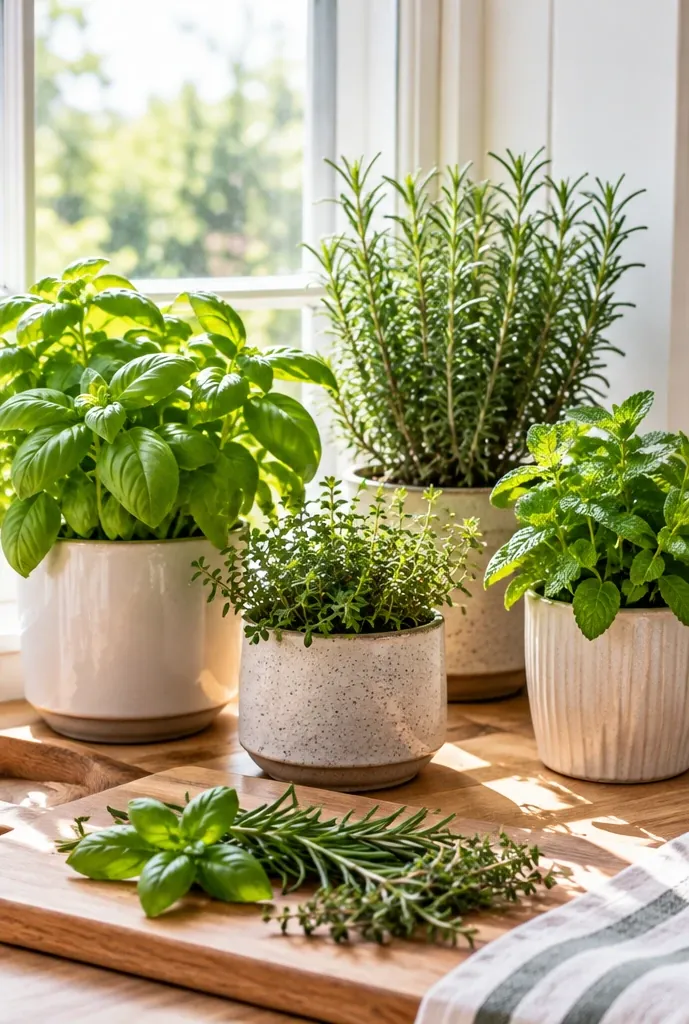
Light is usually the limiting factor. Penn State says most herbs need six hours of direct sunlight, so place them near a south-facing window. Herbs that don’t get enough light become thin and spindly, with smaller leaves and less aroma. Rotate windowsill pots often so every side gets light. Bay, rosemary, and thyme do best in full direct sun, while lemon balm, chives, and cilantro can manage with 2 to 6 hours.
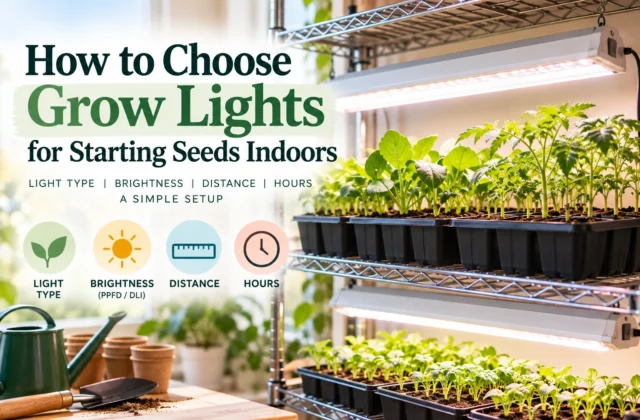
A grow light helps. If you don’t have a bright window, supplemental lighting can make up the difference. Recommendations vary by source and setup: Minnesota Extension suggests about 12 hours of artificial light a day for indoor herbs, while Penn State describes placing herbs 6 to 12 inches below fluorescent lights for 14 to 16 hours. Follow the guidance for your light and adjust if plants stretch. To compare fixtures, see our guide on how to choose grow lights. It’s written for seedlings, but the label basics (lumens, PPF, and PPFD) apply to herbs too.
Temperature: Penn State recommends at least 65 to 70°F during the day and 55 to 60°F at night. Basil can’t survive temperatures below 50°F, so keep it away from cold windowsills in winter.
Humidity and air: Heated homes can be dry in winter. Penn State suggests grouping containers, setting them on a tray of moist pebbles, or using a humidifier. In a room that’s too humid, a fan improves air circulation.
Watering and feeding: Water when the potting mix starts to dry out. Penn State notes that bay, marjoram, oregano, sage, thyme, and rosemary should dry slightly between waterings, while basil should never dry out completely. Minnesota suggests watering when the soil is dry about 1/2 inch below the surface. For fertilizer, Penn State suggests a low dose of water-soluble fertilizer every two weeks, while Minnesota suggests half-strength liquid fertilizer every six weeks indoors. Both point toward light feeding, and Penn State notes that fertilizing more often may affect aroma and taste.
Choosing herbs for indoors: Penn State recommends chives, basil, and cilantro, and suggests avoiding herbs with large root systems, like horseradish, fennel, and lovage. Taprooted herbs like dill need deep pots.
If you have pets: Penn State advises avoiding tarragon in homes with dogs or cats, and the ASPCA lists tarragon as toxic to dogs, cats, and horses.
Moving herbs outside: If you move indoor herbs outdoors for summer, Penn State recommends acclimating them gradually. Start in partial shade and increase their light every few days.
Harvesting Herbs the Right Way
Regular harvesting keeps herbs productive. Minnesota Extension suggests snipping leaves and stems as needed throughout the season, and Clemson notes that regular pruning or harvesting promotes vigorous, well-shaped, sturdy plants.
- Harvest before flowering. Clemson says herbs grown for their leaves are best harvested just before they bloom, when their essential oils peak. Pinching off basil flowers keeps the leaves coming.
- Pick in the morning. Clemson and Mississippi State both suggest harvesting in the early morning after the dew dries, before the heat of the day. Mississippi State adds that if morning isn’t convenient, you can harvest any time.
- Go easy on perennials late in the season. Mississippi State advises against heavy harvests of perennial herbs after late summer, so they have time to regrow.
Preserving the extra: Minnesota notes that herbs can be dried or frozen, depending on the herb. Clemson suggests freezing basil, which loses flavor when dried: chop it, place it in ice cube trays with water, and freeze.
Common Problems
Herbs have relatively few pest problems, but Clemson notes that aphids and spider mites can show up. Aphids are common on fast-growing, crowded plants, and spider mites thrive in dry conditions. Clemson suggests spraying plants with a strong stream of water during dry spells to discourage spider mites. Its best defenses are good growing conditions, good sanitation, removing weak or infested growth, and regular pruning. Our guide to common vegetable garden pests explains how to recognize aphids and spider mites.
Indoors, Penn State suggests yellow sticky traps and better watering habits for fungus gnats, and trimming off branches infested with aphids. Because herbs are meant to be eaten, Penn State notes that pesticides aren’t typically recommended for them. If you use any product, follow the label exactly, and always wash herbs before using them.
Other common problems usually trace back to growing conditions:
- Tall, spindly growth usually means too little light.
- Rotting roots often trace back to soggy soil. Minnesota notes that constant moisture encourages root rot, especially indoors.
- Bland flavor can come from too little sun or too much fertilizer.
Keeping Herbs Through the Winter
What happens in winter depends on the herb and your climate:
- Annuals like basil die with the first frost. Our suggestion: harvest generously before frost and freeze the extra.
- Hardy perennials like chives, mint, oregano, and thyme come back each year where they’re hardy. In cold climates, Minnesota Extension suggests mulching them with 2 to 5 inches of straw, compost, or leaves to reduce winter injury.
- Tender perennials like rosemary may not survive cold winters outdoors. Clemson recommends choosing reliably hardy varieties in the colder parts of South Carolina. Growing tender herbs in containers lets you bring them inside for winter, as both Clemson and Penn State describe. Our guide to finding your USDA hardiness zone can help you check which perennials are likely to survive winter where you live.
Frequently Asked Questions
What are the easiest herbs for beginners?
Clemson describes basil, chives, dill, and mint as easy to grow, and basil and dill as among the easiest herbs to grow from seed. Just remember that mint spreads aggressively, so give it its own pot.
Can I grow herbs indoors all year?
Yes. Penn State notes that herbs can be grown indoors as year-round houseplants. The key is enough light, either from a sunny south-facing window or a grow light.
Why are my herbs tall and spindly?
That’s usually a sign of too little light. Move them to a sunnier spot, add a grow light, or rotate windowsill pots more often.
Should I let my herbs flower?
For leafy herbs, it’s best to harvest before they flower. Clemson notes that flowering reduces basil’s flavor. Some herbs, like dill and cilantro, are also grown for their seeds, so letting a few plants flower is fine if you want them.
Getting Started
Once your first herbs are growing, build from there. Next spring, try starting an annual like basil or dill from seed, add a container for an herb you found yourself wishing you had, or bring a pot indoors before frost. Our suggestion is to keep simple notes on what thrived in your spot, since your own sun, soil, and climate will tell you more than any chart.
Sources
- University of Minnesota Extension: Growing herbs in home gardens
- Penn State Extension: Growing Herbs Indoors
- Clemson Cooperative Extension, Home & Garden Information Center: Herbs (HGIC 1311)
- Mississippi State University Extension: Easy-to-Grow Herbs for the Landscape (Publication 3677)
- University of Illinois Extension: Herbs: Growing
- ASPCA: Toxic and Non-toxic Plants: Tarragon